

Mijia Air Conditioner Eco EGAT Label No.5 with 1 Star 12000BTU FAQ
Parameter Configuration
Q1: What are the selling points of the Mijia Air Conditioner Eco EGAT Label No.5 with 1 Star 12000BTU?
A: The selling points of the Mijia Air Conditioner Eco EGAT Label No.5 with 1 Star 12000BTU are as follows:
1. Ultra-fast cooling with powerful performance combines high airflow with 30-second rapid cooling, while Turbo mode delivers maximum cooling capacity with a single tap, ensuring fast and effective temperature reduction when you need it most.
2. It features variable frequency No.5 with 1 Star energy efficiency, which is more energy-efficient than the industry-standard Level 5, 0-Star rating, helping reduce power consumption. It is equipped with an AI energy-saving engine that continuously optimizes performance to lower energy usage while maintaining effective cooling. In addition, the App-based power consumption monitoring allows you to check real-time energy usage, making energy savings visible and easy to manage.
3. It supports Xiaomi Home App control and Google Assistant voice control for seamless smart interaction. Powered by the Xiaomi AI engine, it learns your habits to optimize performance over time (OTA update in April). The smart area recognition function can identify room size and automatically adjust operating parameters for more precise temperature control and improved energy efficiency (OTA update in April). In addition, intelligent anti-condensation technology uses weather data to maintain a comfortable temperature and humidity balance. The device also supports IoT smart linkage, enabling seamless integration and coordinated control with other Xiaomi smart home devices.
4. You can create a personalized sleep curve to match your habits, improving sleep quality while reducing energy consumption. The intelligent light sensor adjustment detects ambient lighting conditions and automatically dims the display at night to prevent glare and avoid sleep disturbance. In addition, it operates at ultra-low noise levels, ensuring a peaceful and undisturbed sleeping environment comparable to the quiet of a countryside night.
5. It supports wide-voltage operation (STABILIZER) for stable performance during voltage fluctuations. The corrosion-resistant evaporator design, with copper pipes coated in protective anti-corrosion material, enhances durability in harsh environments. Intelligent filter cleaning reminders automatically notify you, reducing maintenance effort and cost, while smart diagnostics help detect potential issues early to prevent major failures. The Auto clean function removes dust and impurities to keep the unit fresh and clean, and the antibacterial, anti-mold filter ensures cleaner, healthier airflow. Full-path OTA upgrades enable continuous functional improvement, the easy-removable snap-fit filter allows quick and convenient cleaning, and the dedicated remote control holder provides more convenient access and storage.
Q2: What is the appearance of the Mijia Air Conditioner Eco EGAT Label No.5 with 1 Star 12000BTU?
A: The appearance information of the Mijia Air Conditioner Eco EGAT Label No.5 with 1 Star 12000BTU is as follows:
1. Geometric shapes are used, avoiding excessive decorative lines, maintaining a minimalist design language.
2. The shape is smooth and friendly, offering a strong homey feel.
3. It is equipped with an LED small black screen, maintaining the classic Mi look, ensuring the product has a cohesive and recognizable design.
Q3: What color is the Mijia Air Conditioner Eco EGAT Label No.5 with 1 Star 12000BTU?
A: The color of the Mijia Air Conditioner Eco EGAT Label No.5 with 1 Star 12000BTU is white and gray.
The advantages are as follows:
1. This versatile color scheme fits various home styles.
2. A neutral color palette is used to avoid color preferences from influencing the purchasing decision.
3. The white and gray colors match the brand tone.
Q4: What are the packaging dimensions of the Mijia Air Conditioner Eco EGAT Label No.5 with 1 Star 12000BTU?
A: The packaging dimensions of the Mijia Air Conditioner Eco EGAT Label No.5 with 1 Star 12000BTU are as follows:
1. Indoor unit: 857 mm × 353 mm × 275 mm (W × H × D).
2. Outdoor unit: 813 mm × 533 mm × 367 mm (W × H × D).
Q5: What are the dimensions of the indoor and outdoor units of the Mijia Air Conditioner Eco EGAT Label No.5 with 1 Star 12000BTU?
A: The dimensions of the indoor and outdoor units of the Mijia Air Conditioner Eco EGAT Label No.5 with 1 Star 12000BTU are as follows:
1. Indoor unit: 795 mm × 295 mm × 205 mm (W × H × D).
2. Outdoor unit: 690 mm × 465 mm × 311 mm (W × H × D).
Q6: Is the Mijia Air Conditioner Eco EGAT Label No.5 with 1 Star 12000BTU an inverter air conditioner?
A: Yes, the Mijia Air Conditioner Eco EGAT Label No.5 with 1 Star 12000BTU intelligently adjusts the compressor's operating frequency based on the actual environment, set temperature, and fan speed.
Q7: What is the net weight of the Mijia Air Conditioner Eco EGAT Label No.5 with 1 Star 12000BTU?
A: The net weight of the Mijia Air Conditioner Eco EGAT Label No.5 with 1 Star 12000BTU is as follows:
1. Indoor unit: 9.2 kg.
2. Outdoor unit: 20 kg.
Note:
The final product weight can vary based on the actual product received.
Q8: What is the gross weight of the Mijia Air Conditioner Eco EGAT Label No.5 with 1 Star 12000BTU (including net weight, packaging, and accessories)?
A: The gross weight of the Mijia Air Conditioner Eco EGAT Label No.5 with 1 Star 12000BTU is as follows:
1. Indoor unit: 11 kg.
2. Outdoor unit: 23.2 kg.
Note:
The final product weight can vary based on the actual product received.
Q9: Which App does the Mijia Air Conditioner Eco EGAT Label No.5 with 1 Star 12000BTU connect to?
A: The Mijia Air Conditioner Eco EGAT Label No.5 with 1 Star 12000BTU supports connectivity through the Xiaomi Home App.
Q10: What is the networking method of the Mijia Air Conditioner Eco EGAT Label No.5 with 1 Star 12000BTU?
A: The Mijia Air Conditioner Eco EGAT Label No.5 with 1 Star 12000BTU uses a 2.4 GHz Wi-Fi connection.
Q11: Does the Mijia Air Conditioner Eco EGAT Label No.5 with 1 Star 12000BTU support firmware upgrades?
A: The Mijia Air Conditioner Eco EGAT Label No.5 with 1 Star 12000BTU supports firmware upgrades. It features full-link OTA technology, ensuring continuous product upgrades and providing a fresh experience every time.
Q12: What is the rated voltage of the Mijia Air Conditioner Eco EGAT Label No.5 with 1 Star 12000BTU?
A: The rated voltage of the Mijia Air Conditioner Eco EGAT Label No.5 with 1 Star 12000BTU is 220-240 V~/1 Phase/50 Hz.
Q13: What is the voltage fluctuation range for the Mijia Air Conditioner Eco EGAT Label No.5 with 1 Star 12000BTU?
A: The Mijia Air Conditioner Eco EGAT Label No.5 with 1 Star 12000BTU can tolerate a voltage fluctuation range of 220~240 V. In extreme conditions, it can operate within a wide voltage range of 130~265 V. However, this affects the air conditioner's service life.
Q14: What is the rated current of the Mijia Air Conditioner Eco EGAT Label No.5 with 1 Star 12000BTU?
A: The rated current of the Mijia Air Conditioner Eco EGAT Label No.5 with 1 Star 12000BTU is 5.4 A.
Q15: What is the power plug specification for the Mijia Air Conditioner Eco EGAT Label No.5 with 1 Star 12000BTU?
A: The Mijia Air Conditioner Eco EGAT Label No.5 with 1 Star 12000BTU does not come with a power plug. However, it provides a 1.5 m power cord without a plug.
Q16: What is the cooling power of the Mijia Air Conditioner Eco EGAT Label No.5 with 1 Star 12000BTU?
A: The rated cooling power of the Mijia Air Conditioner Eco EGAT Label No.5 with 1 Star 12000BTU is 1170 W.
Q17: What is the operating temperature range of the Mijia Air Conditioner Eco EGAT Label No.5 with 1 Star 12000BTU?
A: The normal operating temperature range of the Mijia Air Conditioner Eco EGAT Label No.5 with 1 Star 12000BTU for cooling is 18 °C to 43 °C.
Q18: Is the Mijia Air Conditioner Eco EGAT Label No.5 with 1 Star 12000BTU waterproof? What is its waterproof rating?
A: The outdoor unit of the Mijia Air Conditioner Eco EGAT Label No.5 with 1 Star 12000BTU is waterproof (resistant to rain), with a waterproof rating of IPX4.
Q19: What certification does the Mijia Air Conditioner Eco EGAT Label No.5 with 1 Star 12000BTU have?
A: The certifications of the Mijia Air Conditioner Eco EGAT Label No.5 with 1 Star 12000BTU are as follows:
1. Performance standards: ERP (EN14511-2022).
2. Safety standards: CE (EN60335-2-40).
3. Wireless certification: CE-RED.
4. Environmental certifications: REACH/RoHS.
Q20: What is the cooling capacity of the Mijia Air Conditioner Eco EGAT Label No.5 with 1 Star 12000BTU?
A: The cooling capacity of the Mijia Air Conditioner Eco EGAT Label No.5 with 1 Star 12000BTU is 3700 W.
Q21: What is the recommended room size for the Mijia Air Conditioner Eco EGAT Label No.5 with 1 Star 12000BTU?
A: The recommended room size for the Mijia Air Conditioner Eco EGAT Label No.5 with 1 Star 12000BTU is 15 ㎡-25 ㎡.
Q22: What is the energy efficiency rating of the Mijia Air Conditioner Eco EGAT Label No.5 with 1 Star 12000BTU?
A: The Mijia Air Conditioner Eco EGAT Label No.5 with 1 Star 12000BTU has an energy efficiency rating of No.5 with 1 Star.
Q23: What type of refrigerant does the Mijia Air Conditioner Eco EGAT Label No.5 with 1 Star 12000BTU use?
A: The Mijia Air Conditioner Eco EGAT Label No.5 with 1 Star 12000BTU uses R32 refrigerant.
Q24: What is the normal noise level for the Mijia Air Conditioner Eco EGAT Label No.5 with 1 Star 12000BTU?
A: For the Mijia Air Conditioner Eco EGAT Label No.5 with 1 Star 12000BTU, the noise levels are as follows:
1. Indoor unit: 41 dB(A).
2. Outdoor unit: 52 dB(A).
Note:
1. When combined with ambient noise, the actual measured noise level can be higher.
2. The minimum indoor unit noise is 22 dB, which is the lowest noise level when the indoor unit is delivering air.
Q25: Does the Mijia Air Conditioner Eco EGAT Label No.5 with 1 Star 12000BTU use a DC motor?
A: Yes, both the indoor unit and the outdoor unit of the Mijia Air Conditioner Eco EGAT Label No.5 with 1 Star 12000BTU use a DC motor.
Q26: Is the compressor of the Mijia Air Conditioner Eco EGAT Label No.5 with 1 Star 12000BTU an inverter-based?
A: Yes, the Mijia Air Conditioner Eco EGAT Label No.5 with 1 Star 12000BTU uses a full DC inverter compressor.
Q27: What brand is the compressor used in the Mijia Air Conditioner Eco EGAT Label No.5 with 1 Star 12000BTU?
A: The Mijia Air Conditioner Eco EGAT Label No.5 with 1 Star 12000BTU uses a compressor from the SANYO compressor manufacturer.
Q28: How many rows of condenser and evaporator does the Mijia Air Conditioner Eco EGAT Label No.5 with 1 Star 12000BTU have?
A: The Mijia Air Conditioner Eco EGAT Label No.5 with 1 Star 12000BTU uses a single-row condenser and a dual-row evaporator.
Q29: How many filters does the Mijia Air Conditioner Eco EGAT Label No.5 with 1 Star 12000BTU have, and what type are they?
A: The Mijia Air Conditioner Eco EGAT Label No.5 with 1 Star 12000BTU has one filter located at the top of the indoor unit. It is a PETK anti-mold and antibacterial filter.
Q30: Is the filter of the Mijia Air Conditioner Eco EGAT Label No.5 with 1 Star 12000BTU antibacterial and anti-mold?
A: Yes, the filter of the Mijia Air Conditioner Eco EGAT Label No.5 with 1 Star 12000BTU is both antibacterial and anti-mold.
Q31: What are the length, diameter, and material of the drainage hose for the Mijia Air Conditioner Eco EGAT Label No.5 with 1 Star 12000BTU?
A: The drainage hose for the Mijia Air Conditioner Eco EGAT Label No.5 with 1 Star 12000BTU is 2 meters long, with a diameter of Φ18 mm. It is made of LDPE, EVA, and includes anti-aging and antioxidant agents.
Q32: What is the length of the high-pressure and low-pressure pipes included in the packaging of the Mijia Air Conditioner Eco EGAT Label No.5 with 1 Star 12000BTU?
A: The connection pipe included in the package of the Mijia Air Conditioner Eco EGAT Label No.5 with 1 Star 12000BTU is 4 meters long.
Q33: What materials are the indoor and outdoor unit connection pipes of the Mijia Air Conditioner Eco EGAT Label No.5 with 1 Star 12000BTU made of?
A: The connection pipe included in the package of the Mijia Air Conditioner Eco EGAT Label No.5 with 1 Star 12000BTU is made of copper.
Q34: What type of throttling method does the Mijia Air Conditioner Eco EGAT Label No.5 with 1 Star 12000BTU use?
A: The Mijia Air Conditioner Eco EGAT Label No.5 with 1 Star 12000BTU uses a capillary throttling method.
Q35: What is the air circulation volume of the Mijia Air Conditioner Eco EGAT Label No.5 with 1 Star 12000BTU?
A: The air circulation volume of the Mijia Air Conditioner Eco EGAT Label No.5 with 1 Star 12000BTU is 700 m³/h.
Q36: What is the maximum current of the Mijia Air Conditioner Eco EGAT Label No.5 with 1 Star 12000BTU?
A: The maximum operating current of the Mijia Air Conditioner Eco EGAT Label No.5 with 1 Star 12000BTU is 6.6 A.
Q37: What swing modes does the Mijia Air Conditioner Eco EGAT Label No.5 with 1 Star 12000BTU support?
A: The Mijia Air Conditioner Eco EGAT Label No.5 with 1 Star 12000BTU supports vertical swing airflow mode.
Q38: Does the Mijia Air Conditioner Eco EGAT Label No.5 with 1 Star 12000BTU support automatic defrosting?
A: The Mijia Air Conditioner Eco EGAT Label No.5 with 1 Star 12000BTU is a cooling-only device and does not support automatic defrosting.
Q39: Does the Mijia Air Conditioner Eco EGAT Label No.5 with 1 Star 12000BTU support battery usage statistics?
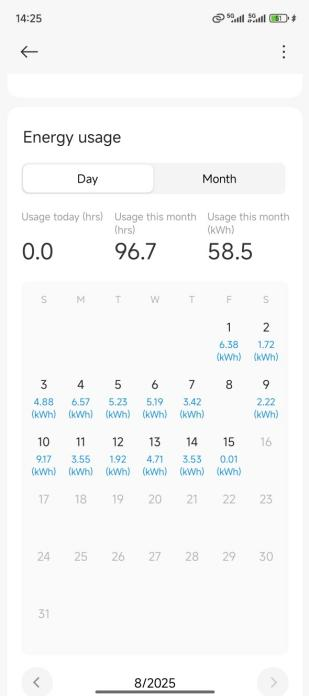
A: Yes, the Mijia Air Conditioner Eco EGAT Label No.5 with 1 Star 12000BTU supports battery usage statistics. You can view the details in the Xiaomi Home App by selecting the air conditioner and scrolling down to see battery usage statistics.
Q40: Does the Mijia Air Conditioner Eco EGAT Label No.5 with 1 Star 12000BTU support anti-direct blowing?
A: The Mijia Air Conditioner Eco EGAT Label No.5 with 1 Star 12000BTU does not support anti-direct blowing.
Q41: Does the Mijia Air Conditioner Eco EGAT Label No.5 with 1 Star 12000BTU use infrared or Bluetooth remote control?
A: The Mijia Air Conditioner Eco EGAT Label No.5 with 1 Star 12000BTU uses the infrared remote control.
Q42: What material is the screen of the Mijia Air Conditioner Eco EGAT Label No.5 with 1 Star 12000BTU made of?
A: The screen on the indoor unit of the Mijia Air Conditioner Eco EGAT Label No.5 with 1 Star 12000BTU is made of PC material.
Q43: Does the remote control of the Mijia Air Conditioner Eco EGAT Label No.5 with 1 Star 12000BTU have an LED indicator?
A: The remote control of the Mijia Air Conditioner Eco EGAT Label No.5 with 1 Star 12000BTU does not have an LED indicator.
Q44: What type of battery does the remote control of the Mijia Air Conditioner Eco EGAT Label No.5 with 1 Star 12000BTU use?
A: The remote control of the Mijia Air Conditioner Eco EGAT Label No.5 with 1 Star 12000BTU uses two AAA dry batteries.
Q45: How much electricity does the Mijia Air Conditioner Eco EGAT Label No.5 with 1 Star 12000BTU consume per day?
A: The actual power consumption of the Mijia Air Conditioner Eco EGAT Label No.5 with 1 Star 12000BTU depends on the operating environment, such as temperature and insulation conditions, making it difficult to estimate. If you want to check the power consumption, you can view it in the Xiaomi Home App.
Q46: Which smartphone brands are compatible with the Mijia Air Conditioner Eco EGAT Label No.5 with 1 Star 12000BTU, and are there any specific requirements for the phone?
A: The Mijia Air Conditioner Eco EGAT Label No.5 with 1 Star 12000BTU is compatible with smartphones running both Android and iOS systems. After downloading the Xiaomi Home App, you can connect and control the air conditioner remotely. There are no specific requirements for the phone.
Q47: What type of mold does the Mijia Air Conditioner Eco EGAT Label No.5 with 1 Star 12000BTU's anti-mold function protect against, and what are the specific standards?
A: The Mijia Air Conditioner Eco EGAT Label No.5 with 1 Star 12000BTU uses a PETK anti-mold and antibacterial filter. It has been tested against the following mold strains: Aspergillus niger (CGMCC3.5487), Chaetomium globosum (CGMCC3.3601), and Penicillium funiculosum (CGMCC3.3875).
Under standard test conditions, after 28 days of cultivation, no significant mold growth was observed.
Q48: How to find the serial number on the Mijia Air Conditioner Eco EGAT Label No.5 with 1 Star 12000BTU?
A: The Mijia Air Conditioner Eco EGAT Label No.5 with 1 Star 12000BTU's SN information can be found in the following locations:
1. The label on the packaging box of both the indoor and outdoor units.
2. The label on the right-side panel of the indoor unit.
3. Inside the accessory bag of the indoor unit (SN sticker).
4. The label inside the large handle of the outdoor unit.
5. After connecting the air conditioner to the Xiaomi Home App, you can also view it within the Xiaomi Home App.
Q49: How to distinguish between the indoor and outdoor units of the Mijia Air Conditioner Eco EGAT Label No.5 with 1 Star 12000BTU using the serial number (SN)?
A: You cannot distinguish between the indoor and outdoor units using the serial number of the Mijia Air Conditioner Eco EGAT Label No.5 with 1 Star 12000BTU. However, the model number is shown on the serial number (SN) label, and you can use it to identify the unit type.
You can refer to the following information to distinguish the indoor and outdoor units of the Mijia Air Conditioner Eco EGAT Label No.5 with 1 Star 12000BTU:
1. The indoor unit model is ASC-12W/N2C1-TH, where the letter "W" indicates that it is an indoor unit.
2. The outdoor unit model is ASC-12O/N2C1-TH, where the letter "O" indicates that it is an outdoor unit.
Q50: What safety precautions should be followed when using the Mijia Air Conditioner Eco EGAT Label No.5 with 1 Star 12000BTU?
A: The safety precautions that should be followed when using the Mijia Air Conditioner Eco EGAT Label No.5 with 1 Star 12000BTU are as follows:
1. This product can only use the power supply indicated on the nameplate. Please use the specified power cord and do not change it by yourself.
2. Do not connect the grounding wire of the power supply to a gas tank or water pipe. Insufficient grounding can result in electric shock.
3. Make sure that the wiring harness, drainage pipe, and compressor pipe are connected correctly. Improper connection can cause the air conditioner not to function normally or reduce performance after some time, or even have problems with water leakage, electrical leakage, refrigerant leakage, electric shock, or fire accidents.
4. Use the remote control to turn the product on or off instead of plugging or unplugging the power plugduring daily use. Please turn off the product and unplug the power plug when not in use for a long time.
5. When the ambient humidity is high, please increase the fan speed or adjust the air guide blade angle to the maximum using the up/down swing button to prevent water droplets from falling.
6. Do not install the air conditioner in places where flammable or explosive gases may leak, where theenvironment is humid, or where electromagnetic interference is significant. The indoor unit of this air conditioner is not waterproof, so do not use it in humid environments such as laundry rooms or bathrooms.
7. When indoor ventilation equipment is used together with indoor heating equipment or gas stoves, it should be ensured to avoid hypoxic accidents caused by insufficient ventilation.
8. Do not blow the air from the air conditioner directly to animals or plants; otherwise, it may causeadverse effects.
9. When cleaning the air conditioner, be sure to turn it off and cut off the power supply, and make sure that the air conditioner has completely stopped before operating.
10. Do not poke your fingers or sticks into the exhaust inlet or exhaust outlet of the air conditioner. Otherwise, it may cause damage to the air conditioner or even personal injury.
11. Do not place any objects on the outdoor unit, and check its mounting brackets frequently. If there is any damage, repair it in time; otherwise, the outdoor unit may fall and cause injury.
12. If any abnormality in the air conditioner (such as a burnt smell) is found, turn the air conditioner off, cut off the power supply immediately, and contact the after-sales service team.
13. For safety's sake, cut off the power supply before touching the air conditioner.
14. Do not install the air conditioner in special places such as ships or vehicles
15. Please follow the refrigerant charging procedures when a recharge is needed.
16. This air conditioner is designed for use at altitudes below 2000 meters. Operation at higher elevations may affect cooling efficiency.
17. This appliance features a grounding connection intended for functional purposes only.
18. The external static pressure of the air conditioner at the test site is 0 MPa.
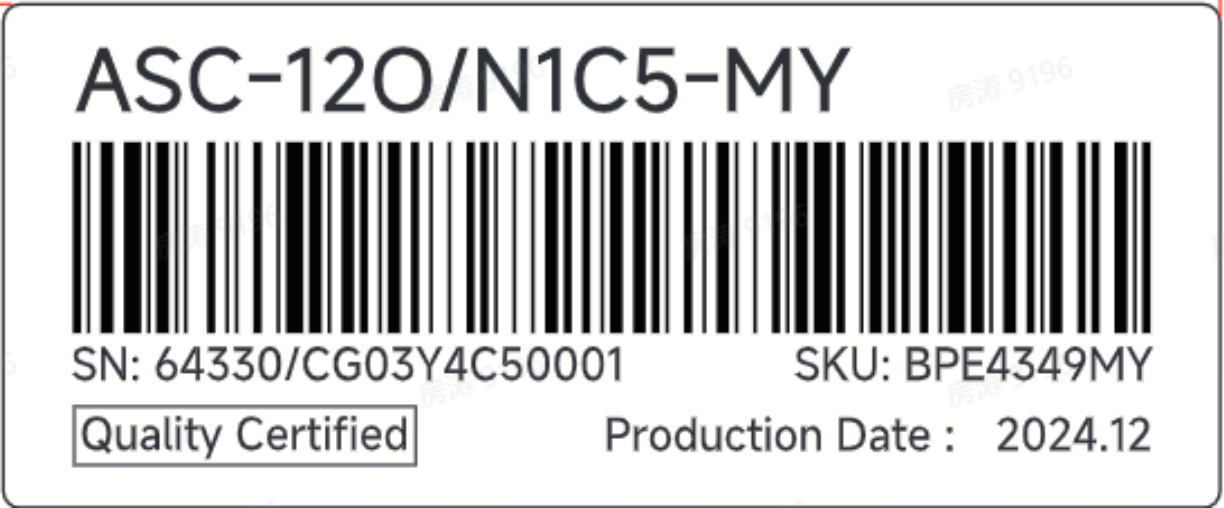
Q51: How to find the manufacturing date of the Mijia Air Conditioner Eco EGAT Label No.5 with 1 Star 12000BTU?
A: You can find the manufacturing date on the label of the indoor and outdoor units of the Mijia Air Conditioner Eco EGAT Label No.5 with 1 Star 12000BTU.
The label example is as follows:
Q52: What do the letters in the model name of the Mijia Air Conditioner Eco EGAT Label No.5 with 1 Star 12000BTU represent?
A: The model number of the Mijia Air Conditioner Eco EGAT Label No.5 with 1 Star 12000BTU is ASC-12WO/N2C1-TH.
The meanings of the letters for the Mijia Air Conditioner Eco EGAT Label No.5 with 1 Star 12000BTU are as follows:
1. Category code: A-Air Conditioner.
2. Type code: S-Split.
3. Heating/Cooling code: C-Cooling (cooling only).
4. Capacity code: 12-12000BTU/h.
5. Indoor unit code: W-Wall-mounted.
6. Outdoor unit code: O-Outdoor unit.
7. Series and product iteration code: N2.
8. Refrigerant code: C-R32 refrigerant.
9. Energy efficiency level: 1-No.5 with 1 Star.
10. Energy efficiency standard code: TH-Thailand.
Q53: How often does the Mijia Air Conditioner Eco EGAT Label No.5 with 1 Star 12000BTU require refrigerant refilling?
A: The Mijia Air Conditioner Eco EGAT Label No.5 with 1 Star 12000BTU does not require regular refrigerant refilling, as the refrigerant circulates within a sealed system and does not deplete under normal conditions. Refilling is only necessary if there is a leak in the system.
Q54: How is the refrigerant distributed in the outdoor unit of the Mijia Air Conditioner Eco EGAT Label No.5 with 1 Star 12000BTU?
A: The outdoor unit condenser of the Mijia Air Conditioner Eco EGAT Label No.5 with 1 Star 12000BTU uses a two-in, two-out refrigerant distribution system.
Q55: How is the refrigerant distributed in the indoor unit of the Mijia Air Conditioner Eco EGAT Label No.5 with 1 Star 12000BTU?
A: The indoor unit evaporator of the Mijia Air Conditioner Eco EGAT Label No.5 with 1 Star 12000BTU uses a four-in, four-out refrigerant distribution system.
Function usage
Q1: How to connect the Mijia Air Conditioner Eco EGAT Label No.5 with 1 Star 12000BTU to the Xiaomi Home App?
A: Install the Xiaomi Home App and log in to your account.
Please refer to the following steps to connect the Mijia Air Conditioner Eco EGAT Label No.5 with 1 Star 12000BTU:
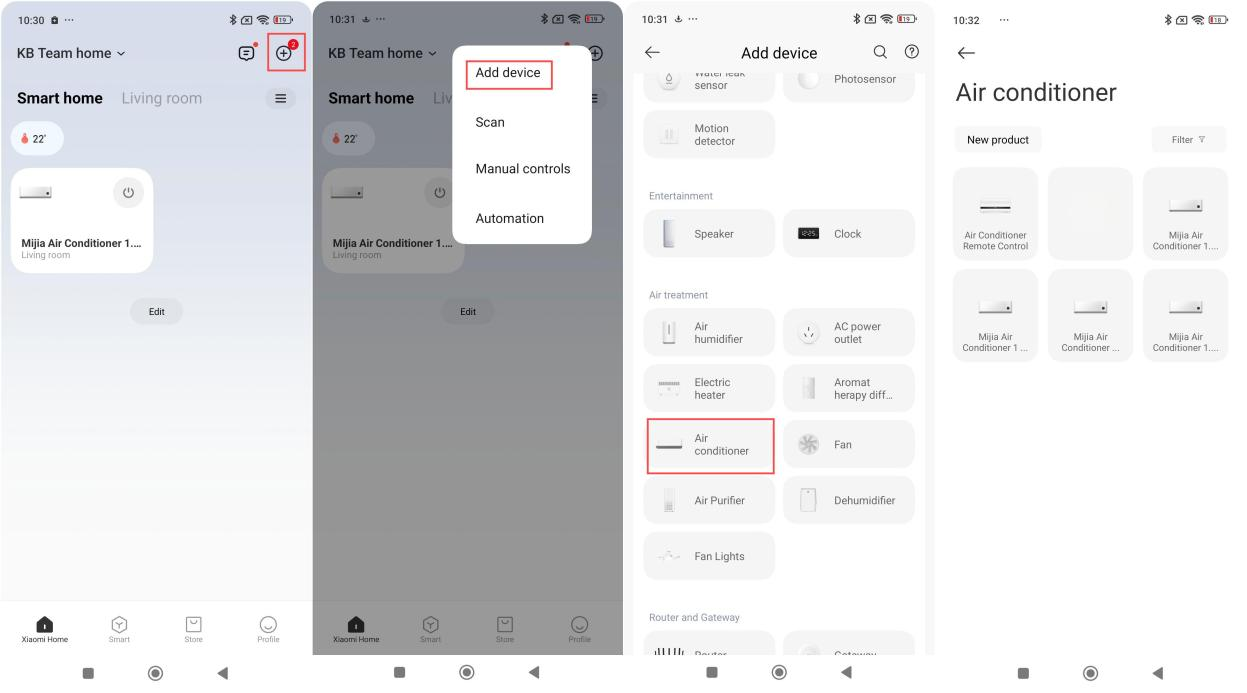
1. First, connect your smartphone to your home Wi-Fi network, then open the Xiaomi Home App. Tap the [+] icon at the upper right corner to enter the [Add device] interface. Select the detected air conditioner from the list to proceed to the Wi-Fi setup page.
2. Continue following the prompts on screen until you see the message displayed Device added successfully.
Note:
1. For Android phones, you can add the air conditioner via nearby devices or manual addition. For iPhones, after installing the Xiaomi Home App, tap the [+] icon on the homepage to manually select the device or select the scanned new device to add.
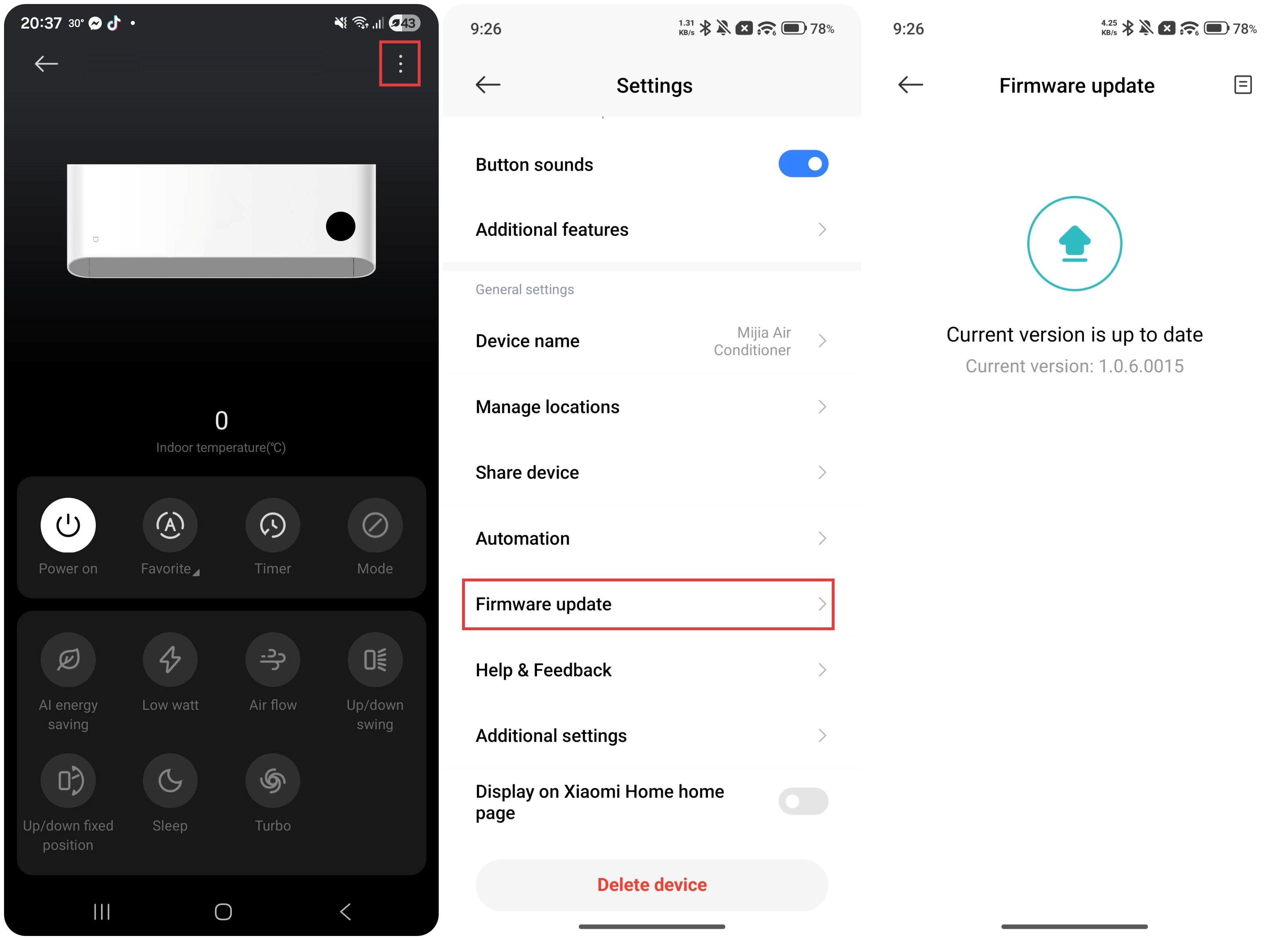
2. To update the air conditioner firmware, you can go to the Xiaomi Home App >> select the air conditioner >> tap the three-dot icon at the upper right corner >> select [Firmware update] to check if there are any updates available.
Q2: How to reset the Wi-Fi of the Mijia Air Conditioner Eco EGAT Label No.5 with 1 Star 12000BTU?
A: Press and hold the Sleep and Light buttons simultaneously for 3 seconds to reset the Mijia Air Conditioner Eco EGAT Label No.5 with 1 Star 12000BTU's Wi-Fi.
Q3: How to adjust the temperature on the Mijia Air Conditioner Eco EGAT Label No.5 with 1 Star 12000BTU?
A: In cooling mode, the temperature adjustment range is 16 °C to 31 °C. Use the temperature up and down buttons on the remote control to adjust the temperature, with each press changing the temperature by 0.5 °C.
Q4: How to control the Mijia Air Conditioner Eco EGAT Label No.5 with 1 Star 12000BTU with the remote control?
A: The remote control uses infrared technology. Simply point it at the front of the Mijia Air Conditioner Eco EGAT Label No.5 with 1 Star 12000BTU (where the display screen is) to operate it.
Note:
1. The infrared receiver is located behind the display screen, which has a certain level of transparency.
2. The effective range of the remote control is within 8 meters and approximately 45° to the left and right.
Q5: How to install the batteries in the remote control of the Mijia Air Conditioner Eco EGAT Label No.5 with 1 Star 12000BTU?
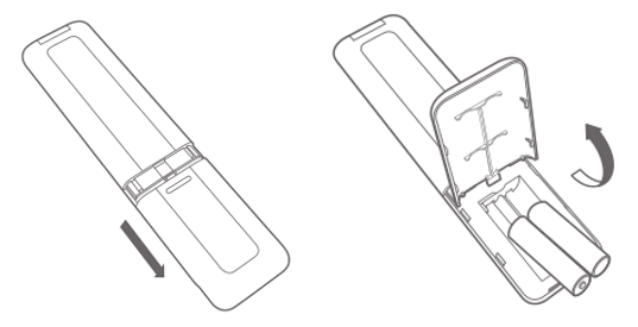
A: To install the batteries in the remote control of the Mijia Air Conditioner Eco EGAT Label No.5 with 1 Star 12000BTU, please refer to the following steps:
1. Press the indentation at the top of the battery cover with your finger and slide it downward to remove the cover.
2. Insert two AAA batteries into the battery compartment, ensuring the correct polarity as shown in the diagram. Then, securely close the battery cover.
Note:
Ensure the batteries are installed with the correct polarity, as incorrect installation can cause the remote control to malfunction. Do not use excessive force or attempt to pry open the battery cover.
Q6: How to update the firmware of the Mijia Air Conditioner Eco EGAT Label No.5 with 1 Star 12000BTU?
A: When a new version is available, you will see an update notification in the upper right corner of the Mijia Air Conditioner Eco EGAT Label No.5 with 1 Star 12000BTU control interface (accessible via the three-dot icon). The firmware is continuously updated to optimize performance. For a better experience, it is recommended to update to the latest version.
Q7: How to set a timer for turning the Mijia Air Conditioner Eco EGAT Label No.5 with 1 Star 12000BTU on or off?
A: You can set the timer using the remote control. While the Mijia Air Conditioner Eco EGAT Label No.5 with 1 Star 12000BTU is in standby or running mode, press the [Timer] button to select the desired time. The setting will automatically confirm and take effect after 2 seconds.
To use the Timer button, please refer to the following information:
1. When the air conditioner is turned on, the remote control can be used to set a turn-off timer. When the air conditioner is turned off, the remote control can be used to set a turn-on timer.
2. Press the Timer button to enter the timer mode, and then press the [+] button or the [-] button to adjust the time. The timer is set successfully if there is no operation for two seconds.
Note:
The turn-on timer defaults to the mode, temperature, fan speed, and swing modes used before the last shutdown. If you would like to use the functions during the next turn-on, you can set the mode, temperature, fan speed, and swing modes as needed when the air conditioner is running, and then turn off the air conditioner and set the turn-on timer.
Additionally, you can use the Xiaomi Home App to control the timer in three ways:
1. Through the [Timer] function on the air conditioner plug's home page in the Xiaomi Home App, select [Power on timer] or [Power off timer] to set the air conditioner.
Note:
When the air conditioner is turned off, you can set a timer to turn it on, and when the air conditioner is turned on, you can set a timer to turn it off.
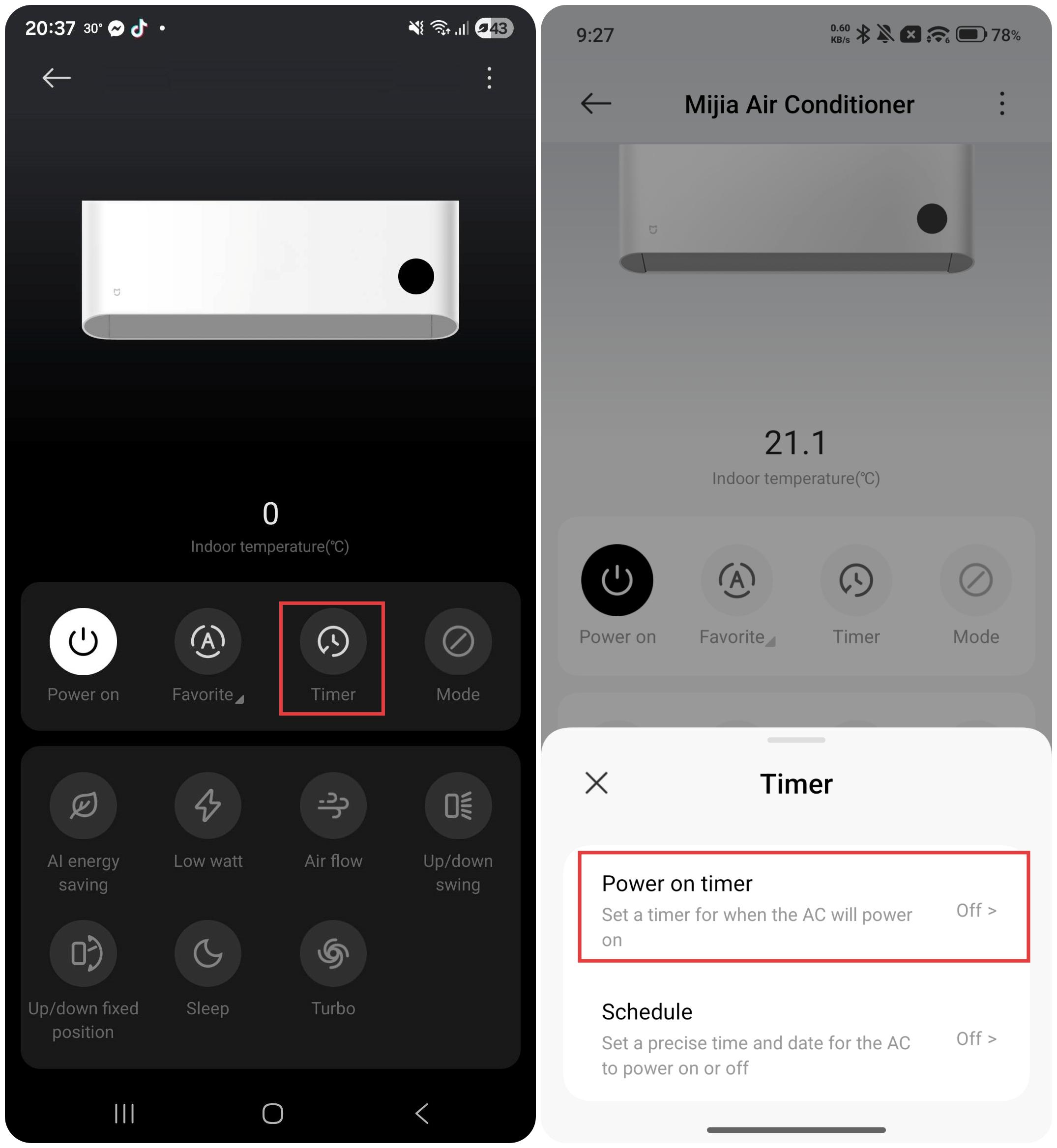
2. Through the [Timer] function on the air conditioner plug's home page in the Xiaomi Home App, select [Schedule] to set the air conditioner to turn on and off at specified times.
Note:
This method includes both an on-time and an off-time. The air conditioner will automatically turn on at the start of the specified period and turn off at the end.
3. Using smart scenes, you can set up scheduled on/off times by adding a smart scene in the [Automation] section of the Xiaomi Home App.
Q8: How can multiple people control the Mijia Air Conditioner Eco EGAT Label No.5 with 1 Star 12000BTU?
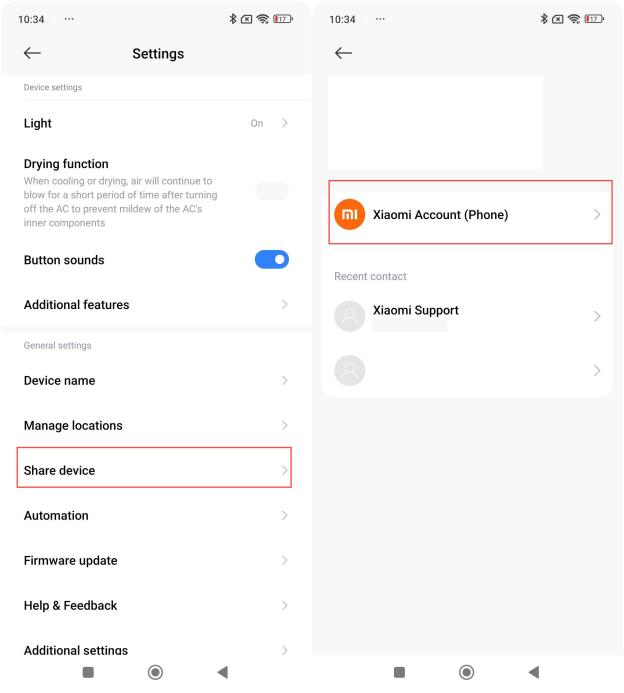
A: After connecting and binding the Mijia Air Conditioner Eco EGAT Label No.5 with 1 Star 12000BTU with the Xiaomi Home App, you can share the air conditioner with family members to control it.
Open the Xiaomi Home App >> select the air conditioner >> tap the three-dot icon at the upper right corner >> choose [Share device] to share it with your family members.
Q9: How to link the Mijia Air Conditioner Eco EGAT Label No.5 with 1 Star 12000BTU with other devices?
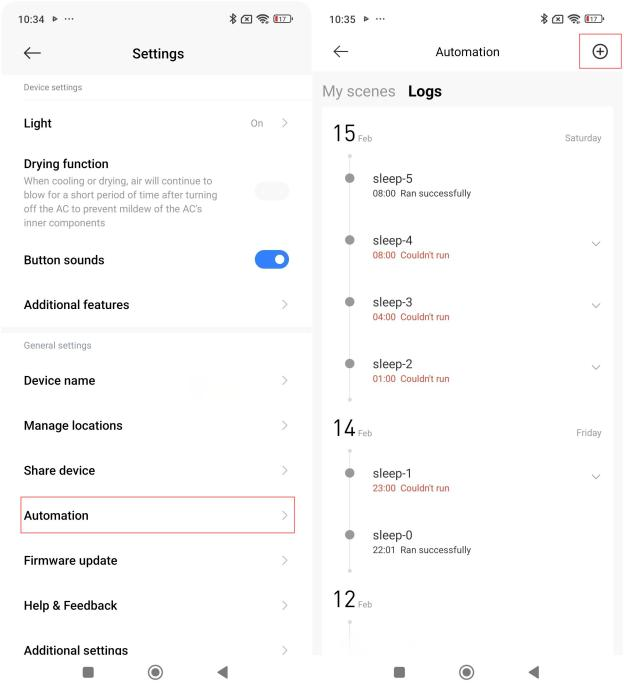
A: This Mijia Air Conditioner Eco EGAT Label No.5 with 1 Star 12000BTU supports smart scene settings, allowing it to be linked with other smart devices for automation.
You can go to the Xiaomi Home App >> select the air conditioner >> tap the three-dot icon at the upper right corner >> select [Automation] >> tap the [+] icon at the upper right corner to manual control or set up automation.
Q10: How to adjust the operating mode of the Mijia Air Conditioner Eco EGAT Label No.5 with 1 Star 12000BTU?
A: Press the Mode button on the remote control to adjust the operating mode of the Mijia Air Conditioner Eco EGAT Label No.5 with 1 Star 12000BTU. Each press of the Mode button will cycle through the available modes in sequence: cooling mode, dry mode, and fan mode.
Q11: How to adjust the fan speed of the Mijia Air Conditioner Eco EGAT Label No.5 with 1 Star 12000BTU?
A: Press the Fan speed button on the remote control of the Mijia Air Conditioner Eco EGAT Label No.5 with 1 Star 12000BTU to adjust the fan speed. Each press will cycle through the available speeds: automatic, quiet (level 1), low (level 2), low-medium (level 3), medium (level 4), medium-high (level 5), high (level 6), turbo (level 7).
Note:
The fan speed is not adjustable in dry mode.
Q12: How to enable the child lock function on the Mijia Air Conditioner Eco EGAT Label No.5 with 1 Star 12000BTU?
A: For the Mijia Air Conditioner Eco EGAT Label No.5 with 1 Star 12000BTU, press and hold both the [+] and [-] buttons for more than 3 seconds to enable or disable the child lock function of the remote control.
Q13: How to adjust the direction of airflow on the Mijia Air Conditioner Eco EGAT Label No.5 with 1 Star 12000BTU?
A: For the Mijia Air Conditioner Eco EGAT Label No.5 with 1 Star 12000BTU, press the Up/Down Swing button to activate or deactivate the vertical swing function.
Note:
This air conditioner can only automatically adjust the vertical (up/down) airflow. To adjust the horizontal (left/right) airflow, manually move the air guide blade to the desired direction.
Q14: How to adjust the screen brightness on the Mijia Air Conditioner Eco EGAT Label No.5 with 1 Star 12000BTU?
A: The Mijia Air Conditioner Eco EGAT Label No.5 with 1 Star 12000BTU supports turning the display of the indoor unit on or off. You can press the Light button to enable or disable it.
Q15: How to turn the Mijia Air Conditioner Eco EGAT Label No.5 with 1 Star 12000BTU on or off?
A: Press the On/Off button to turn the Mijia Air Conditioner Eco EGAT Label No.5 with 1 Star 12000BTU on or off.
Q16: How to activate the sleep mode on the Mijia Air Conditioner Eco EGAT Label No.5 with 1 Star 12000BTU?
A: To activate the sleep mode on the Mijia Air Conditioner Eco EGAT Label No.5 with 1 Star 12000BTU, please refer to the following information:
1. In cooling mode, press the Sleep button to turn sleep mode on or off. When sleep mode is turned on, the sleep icon will be displayed on the remote control screen.
2. When sleep mode is activated, the air conditioner will automatically adjust the temperature based on a sleep curve.
Note:
The sleep mode can be turned on only in cooling mode.
Q17: How to use the dry mode on the Mijia Air Conditioner Eco EGAT Label No.5 with 1 Star 12000BTU?
A: To activate the dry mode on the Mijia Air Conditioner Eco EGAT Label No.5 with 1 Star 12000BTU, press the Mode button on the remote control repeatedly until the dry mode is selected.
Q18: How to restore the Mijia Air Conditioner Eco EGAT Label No.5 with 1 Star 12000BTU to factory settings?
A: To restore the Mijia Air Conditioner Eco EGAT Label No.5 with 1 Star 12000BTU to factory settings, please refer to the following steps:
1. Within five minutes of the air conditioner connecting to power (make sure it is turned off), quickly press the Light button on the remote control six times in five seconds.
2. Then the air conditioner makes a buzzer sound for two seconds.
3. Disconnect the power and reconnect the power, and the factory settings will be restored.
Note:
1. When restored to the factory settings, the air conditioner will delete all data, including but not limited to the set temperature, fan speed, timing information, function switches, and accumulated power consumption.
2. It is not recommended to restore the factory settings unless necessary, so as not to affect the experience of some functions. For example, the accumulated power consumption value will be significantly different from the actual power consumption value.
Q19: What precautions should be taken when using the Mijia Air Conditioner Eco EGAT Label No.5 with 1 Star 12000BTU?
A: Please keep the following precautions in mind when using the Mijia Air Conditioner Eco EGAT Label No.5 with 1 Star 12000BTU:
1. The operating temperature for cooling mode is 18 °C to 43 °C. If the environmental temperature is too high or too low, the air conditioner will enter protection mode and stop working.
2. This product can only use the power supply indicated on the nameplate. Please use the specified power cord and do not change it yourself.
3. Do not connect the power supply grounding wire to a gas tank or water pipe. Inadequate grounding can lead to electric shock.
4. Make sure that the wiring harness, drainage hose, and compressor pipe are connected correctly. Improper connection can cause the air conditioner not to function normally or reduce performance after some time, or even have problems of water leakage, electrical leakage, fluorine leakage, electric shock, or fire accidents.
5. Use the button to turn the product on or off instead of plugging or unplugging the power plug during daily use. Please turn off the product and unplug the power plug when not in use for a long time.
6. When the ambient humidity is high, please increase the fan speed or adjust the air guide blade angle to the maximum using the Up/Down swing button to prevent water droplets from falling.
7. Do not install the air conditioner in places where flammable or explosive gases can leak, where the environment is humid, or where electromagnetic interference is significant. The indoor unit of this air conditioner is not waterproof, so do not use it in humid environments such as laundry rooms or bathrooms.
8. When indoor ventilation equipment is used together with indoor heating equipment or gas stoves, it should be ensured to avoid hypoxic accidents caused by insufficient ventilation.
9. Do not blow the air from the air conditioner directly to animals or plants. Otherwise, it can cause adverse effects.
10. When cleaning the air conditioner, be sure to turn it off and cut off the power supply, and make sure that the air conditioner has completely stopped before operating.
11. Do not poke your fingers or sticks into the exhaust inlet or exhaust outlet of the air conditioner. Otherwise, it can cause damage to the air conditioner or even personal injury.
12. Do not place any objects on the outdoor unit, and check its mounting bracket frequently. If there is any damage, repair it in time. Otherwise, the outdoor unit can fall and cause injury.
13. If any abnormality in the air conditioner (such as a burnt smell) is found, turn the air conditioner off, cut off the power supply immediately, and contact the after-sales service team.
14. For safety's sake, cut off the power supply before touching the air conditioner.
15. Do not install the air conditioner in special places such as ships or vehicles.
Q20: How to use the Drying function of the Mijia Air Conditioner Eco EGAT Label No.5 with 1 Star 12000BTU?
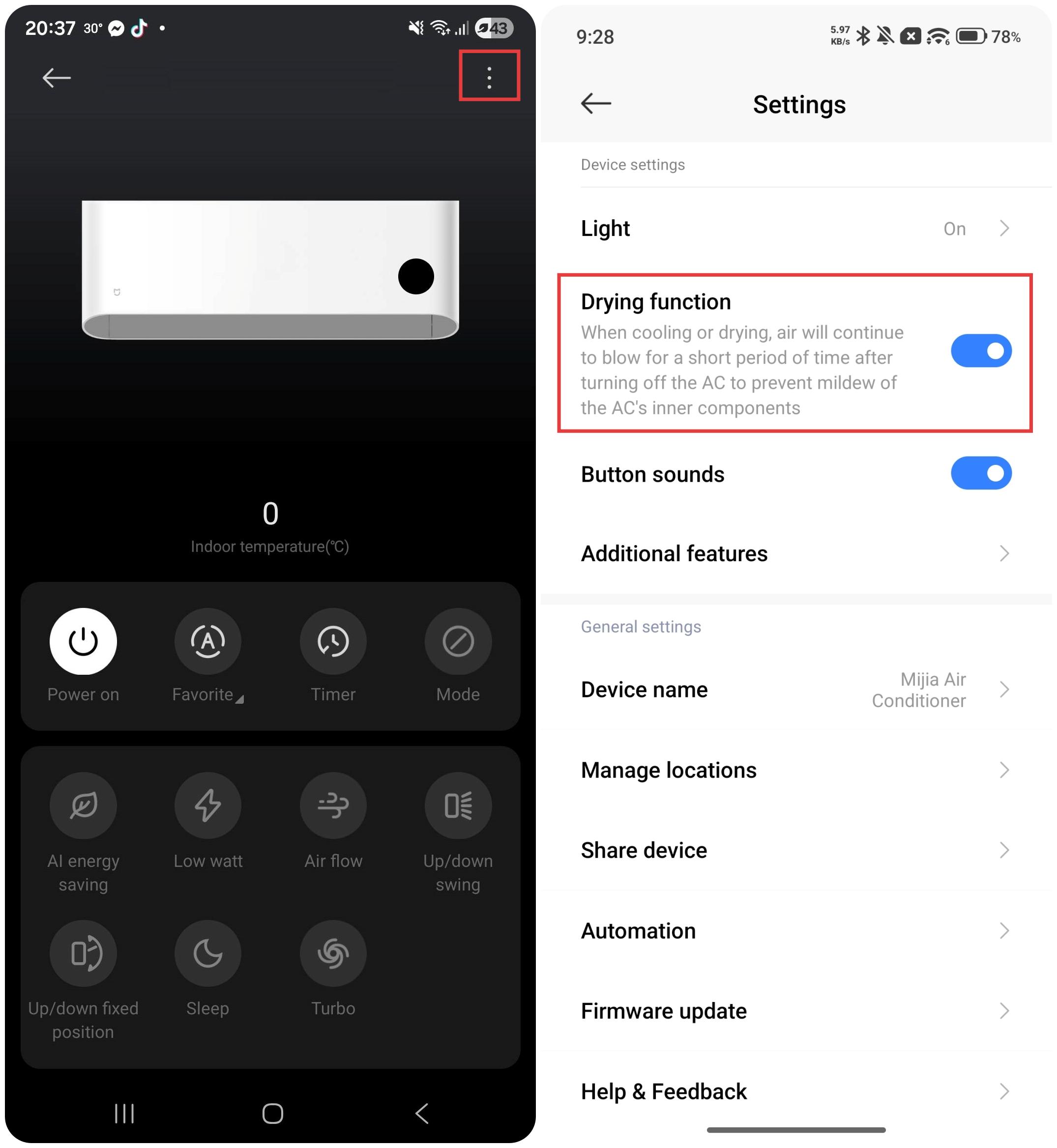
A: This Mijia Air Conditioner Eco EGAT Label No.5 with 1 Star 12000BTU supports the Drying function. You can go to the Xiaomi Home App >> select the air conditioner >> tap the three-dot icon at the upper right corner >> enable [Drying function].
Q21: How to use the AI function of the Mijia Air Conditioner Eco EGAT Label No.5 with 1 Star 12000BTU?
A: To use the AI function of the Mijia Air Conditioner Eco EGAT Label No.5 with 1 Star 12000BTU, please refer to the following information:
1. Voice control: Google Assistant.
(1). Download and log in to the Google Home App.
(2). Connect (bind) the air conditioner to the App. If you have a Google smart speaker at home, you can also bind the air conditioner to the speaker.
(3). Once connected to the internet, you can control the air conditioner using voice commands.
2. AI energy saver: Uses a self-developed deep learning algorithm for long-term energy efficiency and improved environmental adaptability.
Once the air conditioner is connected to the internet, it will automatically detect its environment and location to intelligently select the best mode. For example, if the ambient temperature is 40 °C and the room size is 16 m², the air conditioner will cool the room quickly. While in cooling mode, you can enable the AI energy saver mode in the Xiaomi Home App to maintain precise and stable temperature control, achieving long-term energy efficiency.
Q22: How to check the filter’s service life of the Mijia Air Conditioner Eco EGAT Label No.5 with 1 Star 12000BTU?
A: This Mijia Air Conditioner Eco EGAT Label No.5 with 1 Star 12000BTU does not have a replaceable filter. The filter is durable and does not require replacement. Simply follow the cleaning instructions as needed.
Q23: How to check the sleep curve of the Mijia Air Conditioner Eco EGAT Label No.5 with 1 Star 12000BTU?
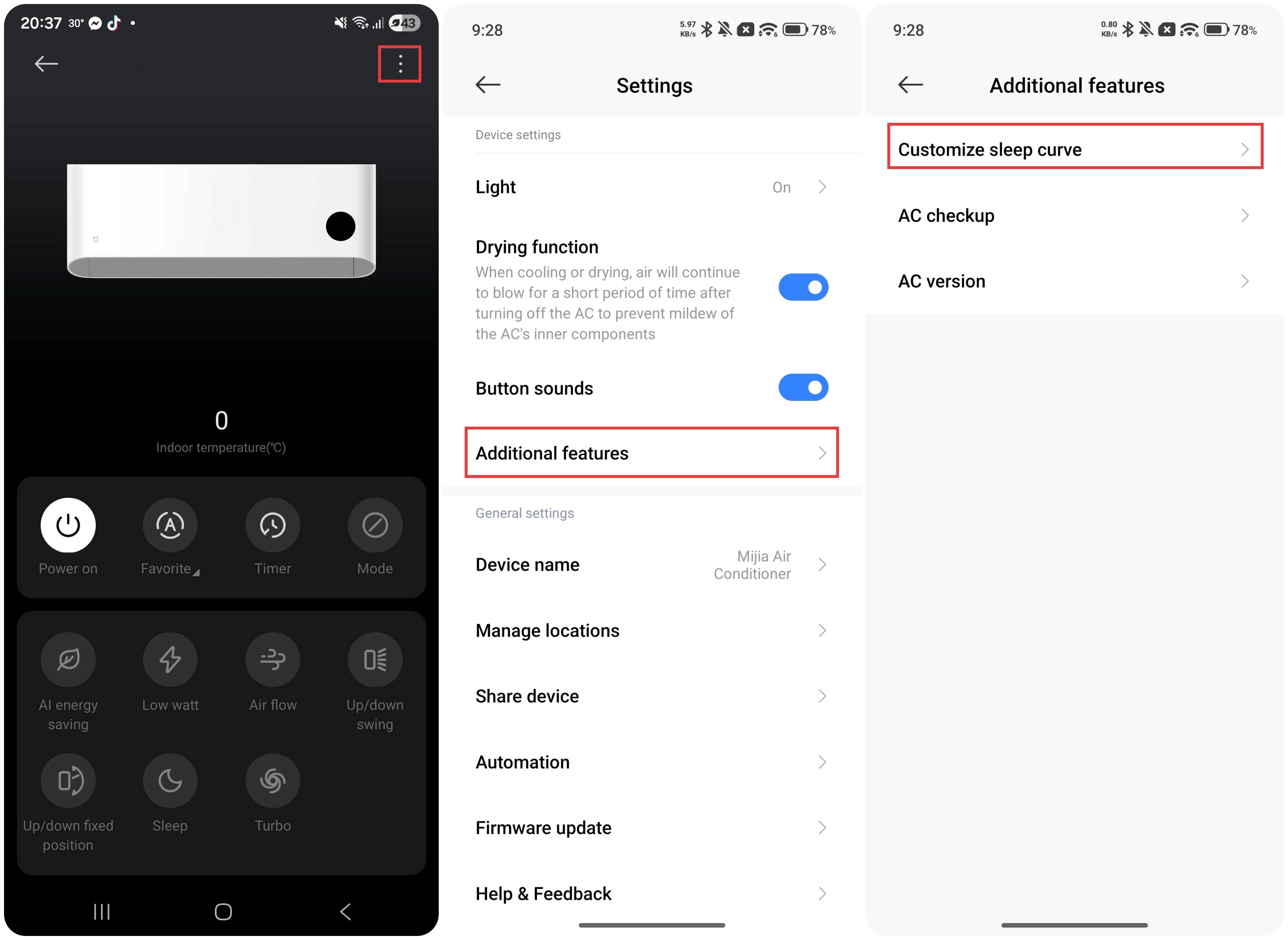
A: To check the sleep curve of the Mijia Air Conditioner Eco EGAT Label No.5 with 1 Star 12000BTU, please refer to the following steps:
1. Open the Xiaomi Home App and find the air conditioner.
2. Tap the three-dot icon in the upper right corner.
3. Select [Additional features].
4. Choose [Customize sleep curve] to view the sleep operation curve.
Q24: How to change the device name of the Mijia Air Conditioner Eco EGAT Label No.5 with 1 Star 12000BTU?
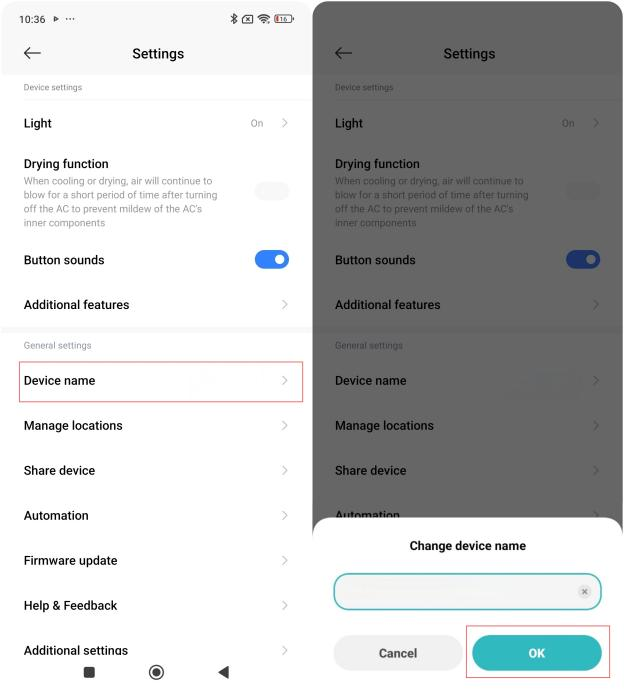
A: To change the device name of the Mijia Air Conditioner Eco EGAT Label No.5 with 1 Star 12000BTU, please refer to the following steps:
1. Open the Xiaomi Home App and locate the air conditioner.
2. Tap the three-dot icon and enter [Device name] to modify the device name.
3. Change the name and confirm that the modification is saved successfully.
Q25: How to manage the location of the Mijia Air Conditioner Eco EGAT Label No.5 with 1 Star 12000BTU?
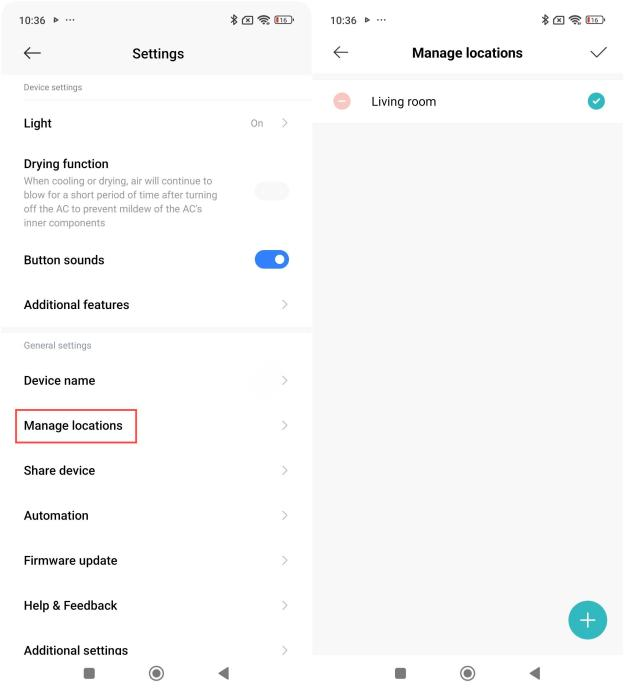
A: To manage the location of the Mijia Air Conditioner Eco EGAT Label No.5 with 1 Star 12000BTU, please refer to the following steps:
1. Open the Xiaomi Home App and locate the air conditioner.
2. Tap the three-dot icon and enter [Manage locations] to manage the device location.
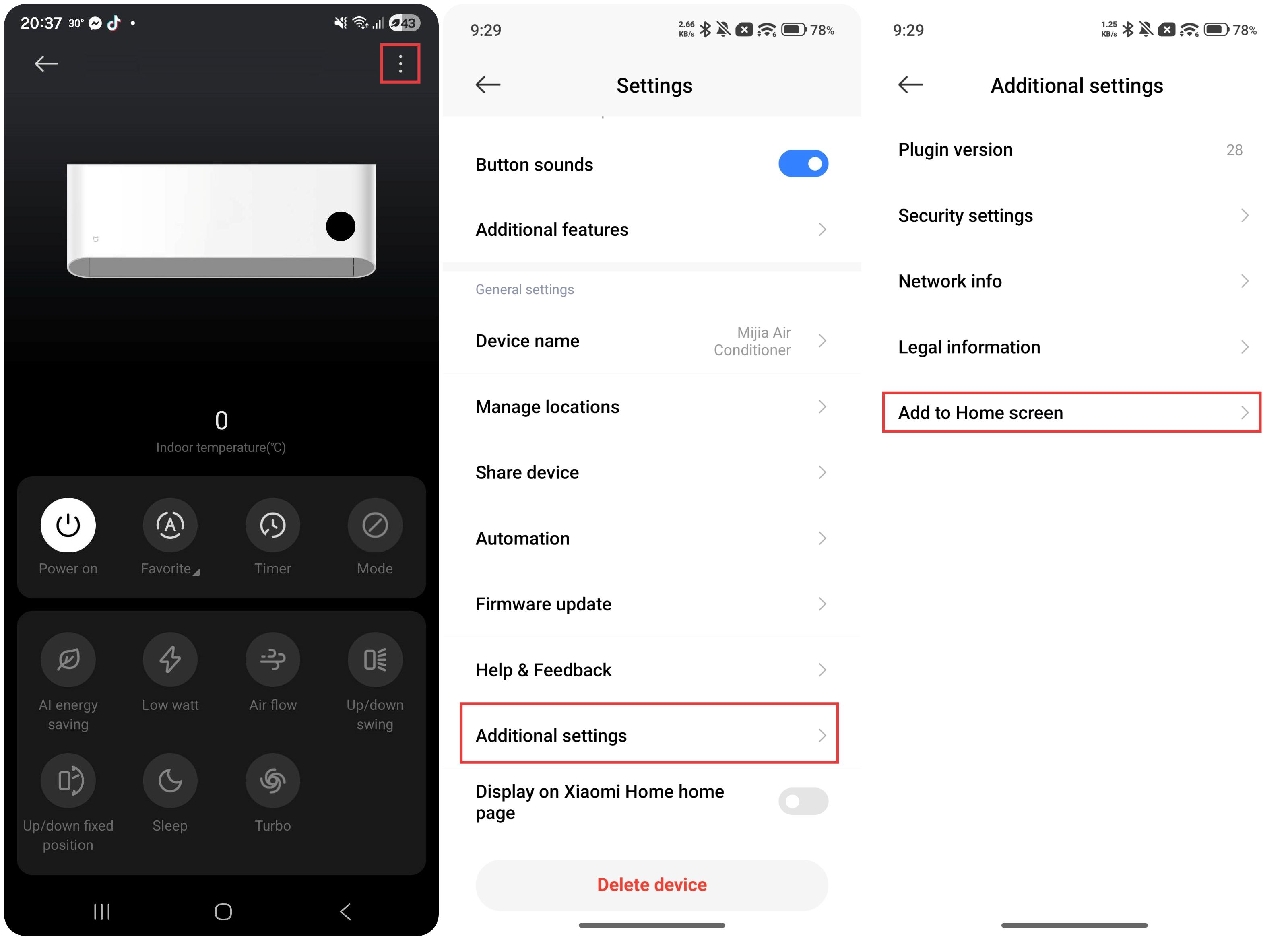
Q26: How to add the Mijia Air Conditioner Eco EGAT Label No.5 with 1 Star 12000BTU to the Home screen?
A: To add the Mijia Air Conditioner Eco EGAT Label No.5 with 1 Star 12000BTU to the Home screen, please refer to the following steps:
1. Open the Xiaomi Home App and locate the air conditioner.
2. Tap the three-dot icon.
3. Enter [Additional settings].
4. Tap [Add to Home screen] to complete the process.
Q27: What is the most energy-efficient temperature setting for the Mijia Air Conditioner Eco EGAT Label No.5 with 1 Star 12000BTU?
A: Energy efficiency depends on factors such as room size and insulation. Setting the Mijia Air Conditioner Eco EGAT Label No.5 with 1 Star 12000BTU to 24 ℃-28 ℃ in cooling mode provides an optimal balance between comfort and energy savings.
Q28: How to bind the Mijia Air Conditioner Eco EGAT Label No.5 with 1 Star 12000BTU to a smart band? How to use a smart band to control the air conditioner?
A: This Mijia Air Conditioner Eco EGAT Label No.5 with 1 Star 12000BTU does not support pairing with a smart band.
Q29: Does the Mijia Air Conditioner Eco EGAT Label No.5 with 1 Star 12000BTU have a memory function? (Will it restore previous settings after a power outage?)
A: The Mijia Air Conditioner Eco EGAT Label No.5 with 1 Star 12000BTU has a power-off memory function, which saves the last operational state before a power outage. However, it will not turn back on automatically when power is restored. You need to turn it on manually.
Q30: How to use the Auto clean function of the Mijia Air Conditioner Eco EGAT Label No.5 with 1 Star 12000BTU?
A: When the Mijia Air Conditioner Eco EGAT Label No.5 with 1 Star 12000BTU is turned off, press and hold the ECO and Timer buttons on the remote control simultaneously for 3 seconds to activate Auto clean. The process takes approximately 40 minutes to complete.
Q31: How to use the ECO function on the Mijia Air Conditioner Eco EGAT Label No.5 with 1 Star 12000BTU?
A: In cooling mode, press the ECO button on the remote control of the Mijia Air Conditioner Eco EGAT Label No.5 with 1 Star 12000BTU to turn on or off the ECO mode, and the remote control display shows "ECO" when the ECO mode is on.
Q32: How to turn the Mijia Air Conditioner Eco EGAT Label No.5 with 1 Star 12000BTU on and off?
A: To turn the Mijia Air Conditioner Eco EGAT Label No.5 with 1 Star 12000BTU on and off, please refer to the following methods:
1. Point the remote control at the air conditioner's display screen and press the On/Off button.
2. If the air conditioner is connected to the internet, open the Xiaomi Home App and press the On/Off button to turn it on or off.
3. Use the Timer button on the remote control or the Xiaomi Home App to set a schedule for automatic power on/off.
Q33: What modes are available on the Mijia Air Conditioner Eco EGAT Label No.5 with 1 Star 12000BTU?
A: The Mijia Air Conditioner Eco EGAT Label No.5 with 1 Star 12000BTU supports the following modes: cooling mode, dry mode, and fan mode.
Q34: Can the indoor unit's piping direction of the Mijia Air Conditioner Eco EGAT Label No.5 with 1 Star 12000BTU be adjusted?
A: Yes, the outlet direction of the indoor unit pipeline can be adjusted to left, back, or right.
Q35: Why is the Mijia Air Conditioner Eco EGAT Label No.5 with 1 Star 12000BTU's filter positioned at the top? What are the advantages?
A: The integrated filter design simplifies the Mijia Air Conditioner Eco EGAT Label No.5 with 1 Star 12000BTU’s structure while ensuring that the top air inlet effectively blocks dust.
The advantages are as follows:
1. The filter is easy to remove with a single operation, without the need to disassemble other parts.
2. The integrated filter does not need to be separated for cleaning, making the process simpler.
Q36: How to use Turbo mode on the Mijia Air Conditioner Eco EGAT Label No.5 with 1 Star 12000BTU?
A: Once the Mijia Air Conditioner Eco EGAT Label No.5 with 1 Star 12000BTU is powered on and running normally, press the Turbo button on the remote control to enable or disable turbo mode. If the air conditioner is connected to the internet, you can also toggle turbo mode via the Xiaomi Home App.
Q37: How does the Turbo mode work on the Mijia Air Conditioner Eco EGAT Label No.5 with 1 Star 12000BTU?
A: Turbo mode maximizes the cooling power of the Mijia Air Conditioner Eco EGAT Label No.5 with 1 Star 12000BTU at the press of a button. Once activated, the system adjusts the compressor frequency and fan speed to their highest levels, enabling rapid cooling.
Q38: After the Mijia Air Conditioner Eco EGAT Label No.5 with 1 Star 12000BTU is connected to Wi-Fi, will it automatically connect when it is powered on again after a power outage?
A: After the Mijia Air Conditioner Eco EGAT Label No.5 with 1 Star 12000BTU is connected to Wi-Fi, the device will automatically connect to Wi-Fi when it is powered on again after a power outage. However, if the power outage is too long and you cannot connect, please reset the Wi-Fi and reconnect.
Q39: How does the Auto clean mode of the Mijia Air Conditioner Eco EGAT Label No.5 with 1 Star 12000BTU work?
A: During the evaporator auto clean process, the Mijia Air Conditioner Eco EGAT Label No.5 with 1 Star 12000BTU work goes through a series of stages, including evaporator cooling and condensation, frosting, defrosting, and air drying, to effectively remove dust and contaminants from the evaporator surface.
Q40: Does the Mijia Air Conditioner Eco EGAT Label No.5 with 1 Star 12000BTU need to be connected to the Xiaomi Home App to be used?
A: The Mijia Air Conditioner Eco EGAT Label No.5 with 1 Star 12000BTU does not need to be connected to the Xiaomi Home App to operate. Even without connecting to the Xiaomi Home App, all functions on the remote control can be used normally.
However, connecting the air conditioner to the Xiaomi Home App enables additional features such as remote control, smart adjustments, scheduled on/off, device linkage, and filter blockage reminders. Therefore, we recommend connecting to the Xiaomi Home App for a more convenient and intelligent experience.
Q41: What voice command does the Mijia Air Conditioner Eco EGAT Label No.5 with 1 Star 12000BTU support?
A: The Mijia Air Conditioner Eco EGAT Label No.5 with 1 Star 12000BTU supports the voice command function of Google Assistant. Currently, the following voice commands are supported to control the air conditioner:
1. Turn on/off: "Hey Google, turn on/off <device name>".
2. Adjust the air conditioner speed: "Hey Google, set <device name> speed to <speed name>".
3. Adjust the air conditioner temperature: "Hey Google, set <device name> to xx degrees".
4. Adjust the air conditioner mode: "Hey Google, set <device name> to <mode name>".
Friendly tips:
You can change the device name by going to Xiaomi Home App >> select the air conditioner >> tap the three-dot icon at the upper right corner >> tap [Device name] >> input the desired name and tapping [OK].
Q42: What languages does the Google Assistant voice command function of the Mijia Air Conditioner Eco EGAT Label No.5 with 1 Star 12000BTU support?
A: The Mijia Air Conditioner Eco EGAT Label No.5 with 1 Star 12000BTU can be easily controlled with voice commands via Google Assistant.
Currently, 16 languages are supported:
Danish, Dutch, English, French, German, Hindi, Indonesian, Italian, Japanese, Korean, Norwegian, Portuguese, Spanish, Swedish, Thai, and Chinese.
For more languages, please await further updates for Google Assistant.
Troubleshooting
Q1: What to do if the Mijia Air Conditioner Eco EGAT Label No.5 with 1 Star 12000BTU fails to connect to the Xiaomi Home App?
A: If the Mijia Air Conditioner Eco EGAT Label No.5 with 1 Star 12000BTU fails to connect to the Xiaomi Home App, please refer to the following information:
1. Check if the air conditioner is powered on and in pairing mode. Unplug the device for 10 seconds, then plug it back in, or reset the Wi-Fi settings before reconnecting.
2. Please check if the connected Wi-Fi is a 2.4 GHz network. The air conditioner only supports 2.4 GHz Wi-Fi and does not support 5 GHz Wi-Fi.
3. Ensure that the router is within a reasonable distance from the air conditioner and that it is functioning properly.
4. Make sure the router's SSID and password do not contain Chinese characters or special symbols, and verify that the entered SSID and password are correct.
5. Set the App region to your current location.
6. Try connecting using a mobile hotspot to check if the issue is with the router network.
7. Update the Xiaomi Home App to the latest version or uninstall and reinstall it. Make sure to follow the step-by-step instructions in the Xiaomi Home App to connect the air conditioner.
If the problem persists, please contact the after-sales service for further inspection.
Q2: What to do if the firmware upgrade of the Mijia Air Conditioner Eco EGAT Label No.5 with 1 Star 12000BTU fails in the Xiaomi Home App?
A: If the firmware upgrade of the Mijia Air Conditioner Eco EGAT Label No.5 with 1 Star 12000BTU fails in the Xiaomi Home App, please refer to the following information:
1. Update the Xiaomi Home App to the latest version and retry.
2. Check if the Wi-Fi connection is stable.
3. Try switching to a different network. Then attempt the upgrade again.
4. Do not exit the upgrade page or close the Xiaomi Home App during the update to ensure a complete installation.
If the issue persists, please contact the after-sales service for further inspection.
Q3: What to do if the Mijia Air Conditioner Eco EGAT Label No.5 with 1 Star 12000BTU stops working automatically during cooling?
A: If the Mijia Air Conditioner Eco EGAT Label No.5 with 1 Star 12000BTU stops working automatically during cooling, please refer to the following information:
1. Please check whether the power supply is working properly. You can plug another appliance into the air conditioner’s power outlet to confirm whether it functions normally.
2. Verify if the room temperature has reached the set temperature. If so, the air conditioner can automatically reduce frequency and fan speed.
3. Please check if the air conditioner displays a fault code. Some codes are protection codes. Turn off the power, wait for a while, and then turn the power back on to see if the device operates normally.
If the issue persists, please contact the after-sales service for further inspection.
Q4: What are the different Wi-Fi indicator statuses on the Mijia Air Conditioner Eco EGAT Label No.5 with 1 Star 12000BTU?
A: The different Wi-Fi indicator statuses on the Mijia Air Conditioner Eco EGAT Label No.5 with 1 Star 12000BTU are as follows:
1. The Wi-Fi indicator flashes, indicating that the Wi-Fi is not connected within 30 minutes.
2. The Wi-Fi indicator turns off when the air conditioner is on, indicating that the Wi-Fi has not been connected for more than 30 minutes.
3. The Wi-Fi indicator remains light when the air conditioner is on, indicating that the Wi-Fi is successfully connected.
4. The Wi-Fi indicator remains light when the air conditioner is off, indicating that the air conditioner is in standby mode.
Q5: What to do if the Wi-Fi indicator on the Mijia Air Conditioner Eco EGAT Label No.5 with 1 Star 12000BTU displays abnormally?
A: Ensure that the Mijia Air Conditioner Eco EGAT Label No.5 with 1 Star 12000BTU is properly connected to the internet. If the issue persists, contact the after-sales service for further inspection.
The normal Wi-Fi indicator on the Mijia Air Conditioner Eco EGAT Label No.5 with 1 Star 12000BTU is displayed as follows:
1. The Wi-Fi indicator flashes, indicating that the Wi-Fi is not connected within 30 minutes.
2. The Wi-Fi indicator turns off when the air conditioner is on, indicating that the Wi-Fi has not been connected for more than 30 minutes.
3. The Wi-Fi indicator remains light when the air conditioner is on, indicating that the Wi-Fi is successfully connected.
4. The Wi-Fi indicator remains light when the air conditioner is off, indicating that the air conditioner is in standby mode.
Q6: What to do if the temperature on the Mijia Air Conditioner Eco EGAT Label No.5 with 1 Star 12000BTU cannot be adjusted?
A: If you cannot control the Mijia Air Conditioner Eco EGAT Label No.5 with 1 Star 12000BTU using remote control, please refer to the following methods:
1. Check if the remote control battery has power. If depleted, replace it with a new battery.
2. If the battery is functional, check if the remote control display is working and if other buttons respond.
3. Please confirm if the air conditioner is in Sleep mode, as this mode can limit the temperature adjustment function.
4. If the remote control is functioning properly, ensure the air conditioner is receiving the remote control signal (listen for a beeping sound).
5. Please turn off the air conditioner for 3 to 5 minutes, then restart it and check if it can be restored.
If the issue persists, please contact the after-sales service for further inspection.
If you cannot control the Mijia Air Conditioner Eco EGAT Label No.5 with 1 Star 12000BTU using the Xiaomi Home App, please refer to the following methods:
1. Remove the device from the Xiaomi Home App, reset the air conditioner’s Wi-Fi, and control it using only the remote control.
2. Check if the issue occurs when using other remote-controlled devices at home to rule out signal interference.
3. Please confirm whether the connected network is working properly. Try switching to a different network and then attempt again.
4. If the issue persists after the above troubleshooting, please contact the after-sales service for inspection.
5. If the issue is resolved, check if the Xiaomi Home App settings are affecting operation. It is possible that a smart scenario has been set, such as sleep curve or other feature. You can reset the air conditioner’s Wi-Fi, reconnect to the Xiaomi Home App, and clear historical data.
If both the remote control and the Xiaomi Home App are unable to control the device, please contact the after-sales service for inspection.
Q7: What to do if the airflow temperature of the Mijia Air Conditioner Eco EGAT Label No.5 with 1 Star 12000BTU is not ideal?
A: If the airflow temperature of the Mijia Air Conditioner Eco EGAT Label No.5 with 1 Star 12000BTU is not ideal, please refer to the following information:
1. Check if the correct mode is selected for the season (cooling or fan mode).
2. Adjust the temperature setting to increase or decrease the desired cooling level.
3. Modify the fan speed setting, as this can also affect airflow comfort.
4. Please check if the indoor unit filter of the air conditioner is dirty or clogged. If so, clean the indoor unit filter.
5. Check whether the cooling effect adjustment in the Xiaomi Home App is set to your desired level.
Q8: What to do if the airflow direction of the Mijia Air Conditioner Eco EGAT Label No.5 with 1 Star 12000BTU cannot be changed?
A: If the airflow direction of the Mijia Air Conditioner Eco EGAT Label No.5 with 1 Star 12000BTU cannot be changed, please refer to the following information:
1. Ensure that the swing function is enabled.
2. Check if the air guide blade is stuck. If so, identify the cause of the obstruction.
3. The air conditioner only supports automatic vertical swing (up and down) and cannot swing horizontally (left and right) automatically. If horizontal adjustment is required, please manually toggle the left-right swing louvers.
If the issue persists, please contact the after-sales service for further inspection
Q9: What to do if the fan speed cannot be adjusted on the Mijia Air Conditioner Eco EGAT Label No.5 with 1 Star 12000BTU?
A: If you cannot control the Mijia Air Conditioner Eco EGAT Label No.5 with 1 Star 12000BTU using remote control, please refer to the following methods:
1. Check if the remote control battery has power. If depleted, replace it with a new battery.
2. If the battery is functional, check if the remote control display is working and if other buttons respond.
3. Please confirm if you can view the fan speed level on the LCD display area at the top of the remote control, and adjust it using the fan speed button.
4. If the remote control is functioning properly, ensure the air conditioner is receiving the remote control signal (listen for a beeping sound).
5. Please turn off the air conditioner for 3 to 5 minutes, then restart it and check if it can be restored.
If the issue persists, please contact the after-sales service for further inspection.
If you cannot control the Mijia Air Conditioner Eco EGAT Label No.5 with 1 Star 12000BTU using the Xiaomi Home App, please refer to the following methods:
1. Remove the device from the Xiaomi Home App, reset the air conditioner’s Wi-Fi, and control it using only the remote control.
2. Check if the issue occurs when using other remote-controlled devices at home to rule out signal interference.
3. Please confirm whether the connected network is working properly. Try switching to a different network and then attempt again.
4. If the issue persists after the above troubleshooting, please contact the after-sales service for inspection.
5. If the issue is resolved, check if the Xiaomi Home App settings are affecting operation. You can reset the air conditioner’s Wi-Fi, reconnect to the Xiaomi Home App, and clear historical data.
If both the remote control and the Xiaomi Home App are unable to control the device, please contact the after-sales service for inspection.
Q10: What to do if the timer function on the Mijia Air Conditioner Eco EGAT Label No.5 with 1 Star 12000BTU is not working?
A: If the timer function on the Mijia Air Conditioner Eco EGAT Label No.5 with 1 Star 12000BTU is not working, please troubleshoot as follows:
1. First, check if your device is connected to the network properly, as the timer function requires a stable internet connection.
2. If the device is connected but the timer function still doesn't work, try restarting the device to see if that resolves the issue.
3. If the issue persists after restarting the device, check if you have set the timer function via the Xiaomi Home App plugin. Ensure that the device's storage chip has not been reset due to power loss. If the device is configured through smart scene to use the timer, it will not work after a network disconnection, as the servers need to send commands to the device over the network.
Q11: What to do if the Mijia Air Conditioner Eco EGAT Label No.5 with 1 Star 12000BTU cooling effect is poor?
A: If the cooling effect of the Mijia Air Conditioner Eco EGAT Label No.5 with 1 Star 12000BTU is poor, please follow these steps:
1. Check the air conditioner settings, turn off Sleep mode, and increase the indoor unit fan speed to improve the cooling effect.
2. Check the environment, including whether there are any indoor heat sources, whether the doors and windows are properly closed, and whether the room size matches the air conditioner’s capacity.
3. Check if the air intake and air outlet of the air conditioner are obstructed to ensure proper airflow.
4. Check if the indoor unit filter is dirty or clogged, and clean the filter.
5. Check if the outdoor temperature is too high (over 43 °C), as the cooling effect will decrease under such conditions, which is normal.
6. Please check whether the Cooling adjustment in the Xiaomi Home App is set to Mild cooling or Gentle cooling. If so, adjust the cooling effect to Intense cooling.
If the issue persists after the above checks, please contact the after-sales service for inspection.
Q12: What to do if the Mijia Air Conditioner Eco EGAT Label No.5 with 1 Star 12000BTU is not cooling?
A: If the Mijia Air Conditioner Eco EGAT Label No.5 with 1 Star 12000BTU is not cooling, please follow these troubleshooting steps:
1. Check the air conditioner settings, turn on cooling mode, and set the fan speed to the highest.
2. After turning on the air conditioner for 5 minutes, place your hand near the air outlet to feel if cold air is blowing out. If cold air is blowing, the air conditioner is working normally. However, it takes time for the cooling to lower the room temperature. Turn on the air conditioner and continue to observe for up to one hour. If the room temperature keeps decreasing during this period, it indicates normal operation. When the air conditioner is blowing cold air, after one hour of operation, place a thermometer at the air outlet for 5 to 10 minutes. If the measured temperature is below 10 °C, this is considered normal.
If the above steps do not resolve the issue, it is recommended to apply for after-sales service.
Q13: What to do if the Mijia Air Conditioner Eco EGAT Label No.5 with 1 Star 12000BTU’s airflow is weak?
A: If the Mijia Air Conditioner Eco EGAT Label No.5 with 1 Star 12000BTU’s airflow is weak, please follow these steps:
1. Check the fan speed settings and try setting the fan speed to the highest.
2. Check if the indoor unit filter is dirty or clogged. A clogged filter can reduce airflow, so clean the indoor unit filter.
If the issue persists after the above checks, please contact the after-sales service for inspection.
Q14: What to do if the Mijia Air Conditioner Eco EGAT Label No.5 with 1 Star 12000BTU cannot start?
A: If the Mijia Air Conditioner Eco EGAT Label No.5 with 1 Star 12000BTU cannot start, please follow these troubleshooting steps:
1. First, check if the power cord is properly connected and the plug is inserted correctly.
2. Check if the socket is powered. If using a power outlet, you can try using another appliance to check if there is power (the air conditioner will emit a beep sound when powered on, indicating that the power is normal).
3. Check if the remote control batteries are depleted, and try replacing the batteries.
4. Use your phone's camera to point at the remote control and check if a signal is being emitted. If you see a red flashing light, the remote control is functioning properly.
5. If connected to the Xiaomi Home App, you can try turning on the air conditioner via the App.
If the issue persists after the above checks, please contact the after-sales service for inspection.
Q15: What to do if the circuit breaker trips during the Mijia Air Conditioner Eco EGAT Label No.5 with 1 Star 12000BTU use?
A: If the circuit breaker trips during the Mijia Air Conditioner Eco EGAT Label No.5 with 1 Star 12000BTU use, it can be caused by power load limitations. Please connect the air conditioner to a dedicated power outlet. If the issue persists, please apply for after-sales inspection.
Q16: Why does the Mijia Air Conditioner Eco EGAT Label No.5 with 1 Star 12000BTU make noise during operation?
A: If the Mijia Air Conditioner Eco EGAT Label No.5 with 1 Star 12000BTU is making excessive noise, please check the type of noise, such as whether it is wind noise, relay click sound, plastic part expansion and contraction sounds, compressor running noise, water flow sounds, or the sound of refrigerant circulation (a bubbling sound similar to boiling water). These are normal. If you hear other noises or the noise is too loud, please contact the after-sales service for inspection.
Q17: How to prevent the Mijia Air Conditioner Eco EGAT Label No.5 with 1 Star 12000BTU from freezing?
A: The Mijia Air Conditioner Eco EGAT Label No.5 with 1 Star 12000BTU will not freeze during normal operation in cooling mode. If you notice ice buildup on the indoor unit, please contact the after-sales service for inspection.
Q18: What to do if the Mijia Air Conditioner Eco EGAT Label No.5 with 1 Star 12000BTU leaks water inside?
A: If the Mijia Air Conditioner Eco EGAT Label No.5 with 1 Star 12000BTU is leaking water inside, please follow these steps:
1. Check if the indoor unit filter is excessively dirty. A dirty filter can restrict airflow, leading to moisture buildup and causing leakage. Clean the indoor unit filter.
2. Observe if water droplets occasionally form at the air outlet. This can be due to high humidity in the air, where water vapor condenses when it comes into contact with cold surfaces. This is a normal phenomenon. You can try closing the doors and windows, raising the temperature setting, increasing the fan speed, or turning on the swing mode. Additionally, you can enable Reduce condensation and water dripping on the air deflector in the Xiaomi Home App to help address this.
3. If there is a large amount of water leakage from the indoor unit, immediately turn off the air conditioner, disconnect the power, wipe up the water, and contact the after-sales service for inspection. Ensure that the air conditioner is not used before the service personnel arrive.
Q19: How to handle water leakage from the outdoor unit of the Mijia Air Conditioner Eco EGAT Label No.5 with 1 Star 12000BTU?
A: The Mijia Air Conditioner Eco EGAT Label No.5 with 1 Star 12000BTU only supports cooling mode, and the outdoor unit does not generate condensate. If water leakage occurs from the outdoor unit during cooling, it is due to the outdoor unit's pipes being at a low temperature during cooling. When the outdoor air humidity is high, condensation forms on the surface of the cold pipes. The condensate then drips onto the base and is drained out through the drainage hole. This is a normal phenomenon and does not require repair.
Note:
1. It can also be residual rainwater draining out from the drainage hole after rainfall.
2. If you believe this situation needs to be addressed, you can contact the after-sales service to install a drainage nozzle and drainage hose on the outdoor unit's base.
Q20: What to do if the remote control of the Mijia Air Conditioner Eco EGAT Label No.5 with 1 Star 12000BTU is not working or the buttons are unresponsive?
A: If the remote control of the Mijia Air Conditioner Eco EGAT Label No.5 with 1 Star 12000BTU is not working or the buttons are unresponsive, please follow these steps to troubleshoot:
1. Check if the remote control battery is charged properly.
2. If the remote control still does not work, try turning off the power and restarting the device.
3. Check if there are any sources of interference in the surrounding environment, such as nearby routers or high-power appliances that could affect the signal.
4. After inserting the remote control batteries correctly, press and hold a button, and use your phone's camera to point at the remote control to check if a signal is being emitted. If you see a red flashing light, the remote control is functioning properly.
If none of the above steps resolve the issue, it is recommended to contact after-sales service for further assistance.
Q21: What to do if the Mijia Air Conditioner Eco EGAT Label No.5 with 1 Star 12000BTU emits an odor during operation?
A: If the Mijia Air Conditioner Eco EGAT Label No.5 with 1 Star 12000BTU emits an unpleasant odor, please refer to the following information:
1. Check if the filter is excessively dirty. Clean the filter and check if the odor persists.
2. Please turn on Auto clean mode to clean the evaporator.
If the problem continues, please contact the after-sales service for inspection.
Q22: What to do if the outdoor unit of the Mijia Air Conditioner Eco EGAT Label No.5 with 1 Star 12000BTU emits smoke during operation?
A: If you notice smoke coming from the outdoor unit of the Mijia Air Conditioner Eco EGAT Label No.5 with 1 Star 12000BTU, immediately disconnect the power and contact the after-sales service for inspection.
Q23: What to do if the Auto clean function of the Mijia Air Conditioner Eco EGAT Label No.5 with 1 Star 12000BTU fails or is ineffective?
A: If the Auto clean function of the Mijia Air Conditioner Eco EGAT Label No.5 with 1 Star 12000BTU fails or is ineffective, please follow these steps:
1. Please make sure the Auto clean function is properly activated (press and hold the Eco and Timer buttons simultaneously for 3 seconds to enable this function).
2. Please check whether the air conditioner meets the activation conditions for Auto clean. The Auto clean function cannot be activated if the following temperature conditions are met: The indoor temperature is above 30 °C and the outdoor temperature is above 40 °C, the indoor temperature is above 38 °C, the outdoor temperature is above 40 °C, the indoor temperature is below 16 °C, or the outdoor temperature is below 0 °C.
If the problem continues, please contact the after-sales service for inspection.
Q24: What to do if the Mijia Air Conditioner Eco EGAT Label No.5 with 1 Star 12000BTU indoor unit blows water or mist into the room?
A: If the indoor unit of the Mijia Air Conditioner Eco EGAT Label No.5 with 1 Star 12000BTU is blowing water or mist into the room, it is due to high humidity in the room. The cold air blown out from the indoor unit encounters warmer air with higher humidity, causing condensation. This is a normal phenomenon and does not require any additional action. If the room's air humidity is too high, or if the evaporator or connecting pipe temperature is low, condensation can form on the panel and connecting pipes, which is also considered normal.
Q25: What to do if there is a strange smell after unpacking the new Mijia Air Conditioner Eco EGAT Label No.5 with 1 Star 12000BTU?
A: If you notice an odor after unpacking the new Mijia Air Conditioner Eco EGAT Label No.5 with 1 Star 12000BTU, please confirm the following:
1. Check if the air conditioner has been covered for a long time, causing the air outlet to become damp or moldy.
2. If the smell comes from the plastic parts of the indoor unit, this is normal for a new device. The smell will disappear after a period of time, so you can use it with confidence.
Q26: What to do if there is a burning odor while the Mijia Air Conditioner Eco EGAT Label No.5 with 1 Star 12000BTU is running?
A: If you notice a distinct burnt smell while using the Mijia Air Conditioner Eco EGAT Label No.5 with 1 Star 12000BTU, it is recommended to immediately disconnect the power and stop using it. Please contact the after-sales service for inspection.
Q27: What to do if the Mijia Air Conditioner Eco EGAT Label No.5 with 1 Star 12000BTU does not power on?
A: If the Mijia Air Conditioner Eco EGAT Label No.5 with 1 Star 12000BTU does not power on, please follow these steps:
1. Check if the power cable is properly connected and the plug is securely inserted.
2. Confirm that the power outlet is functional. You can test it by plugging in another electrical device to see if it works.
3. Verify if you hear a beep sound when the air conditioner is powered on. If you hear the sound, it indicates that the air conditioner is receiving power properly.
If the issue persists, please contact the after-sales service for inspection.
Q28: What to do if the air deflector of the Mijia Air Conditioner Eco EGAT Label No.5 with 1 Star 12000BTU cannot close properly?
A: If the Mijia Air Conditioner Eco EGAT Label No.5 with 1 Star 12000BTU's air deflector does not close properly, turn off the air conditioner and unplug the power cord. Wait for two minutes, then plug it back in and check if the issue is resolved.
If the problem persists, please contact the after-sales service for inspection.
Q29: What to do if the Mijia Air Conditioner Eco EGAT Label No.5 with 1 Star 12000BTU remote control does not display or only partially displays?
A: If the Mijia Air Conditioner Eco EGAT Label No.5 with 1 Star 12000BTU remote control does not display, follow these steps:
1. Check if the remote control batteries are depleted and replace them if necessary.
2. Ensure the remote control is powered on by pressing the power button and checking if the display appears.
If the issue persists, please contact the after-sales service for inspection.
Q30: What to do if the Mijia Air Conditioner Eco EGAT Label No.5 with 1 Star 12000BTU screen does not show or only partially displays?
A: If the Mijia Air Conditioner Eco EGAT Label No.5 with 1 Star 12000BTUr screen does not show or only partially displays, follow these steps:
1. Use the remote control to turn on the display light by pressing the Light button and check if it resolves the issue.
2. Turn off the air conditioner and unplug it for two minutes, then reconnect the power and check if the display returns to normal.
If the issue persists, please contact the after-sales service for inspection.
Q31: What to do if the Mijia Air Conditioner Eco EGAT Label No.5 with 1 Star 12000BTU remote control screen is not illuminated?
A: The Mijia Air Conditioner Eco EGAT Label No.5 with 1 Star 12000BTU remote control display does not have a backlight. If the numbers and icons are displayed normally, the lack of illumination is a normal condition.
Q32: How to handle the Mijia Air Conditioner Eco EGAT Label No.5 with 1 Star 12000BTU error codes?
A: To handle the Mijia Air Conditioner Eco EGAT Label No.5 with 1 Star 9000BTU error codes, please refer to the following information:
| Number | Error Code Category | Error Code | Definition | Explanation | Solution |
| 1 | Sensor Fault Protection | F1.1 | Indoor ambient temperature sensor failure | Indoor unit ambient temperature sensing pack failure | 1. Find the corresponding sensor according to the displayed error code, re-plug the sensor, and confirm whether the sensor failure is caused by poor contact; 2. Use a multimeter to test the sensor resistance to detect whether there is a short circuit, open circuit, or whether the resistance value. Hold the temperature sensor with your hand and detect its resistance. If it gradually decreases, it is normal. If there is a fault, replace the corresponding sensor; 3. You can use the "debugging mode" to see whether the corresponding displayed temperature is normal for auxiliary judgment. If it displays "50" or "0" or "--" and flashes, it means that the sensor is abnormal. |
| 2 | F1.2 | Outdoor ambient temperature sensor failure | Outdoor unit ambient temperature sensing pack failure | ||
| 3 | F2.1 | Indoor coil temperature sensor failure | Indoor unit pipe temperature sensing pack failure | ||
| 4 | F2.2 | Outdoor coil temperature sensor failure | Outdoor unit pipe temperature sensing pack failure | ||
| 5 | F2.3 | Indoor pipe temperature sensing pack failure | Indoor unit pipe temperature sensing pack failure protection | ||
| 6 | F2.4 | Outdoor pipe temperature sensing pack failure | Outdoor unit pipe temperature sensing pack failure protection | ||
| 7 | F3.1 | Outdoor exhaust temperature sensor failure | Outdoor unit exhaust temperature sensing pack failure | ||
| 8 | F3.2 | Exhaust temperature sensing pack failure protection | Outdoor unit exhaust temperature sensing pack failure protection | ||
| 9 | Electronic Control Hardware Error | E1 | Outdoor EEPROM failure | Outdoor unit electronic control program failure | 1. If you use an after-sales board, check whether the EEPROM parameters match; 2. Replace the outdoor unit electronic control board. |
| 10 | E3 | Communication failure between the indoor unit board and the display board | Communication failure between the indoor unit board and the display board | 1. Check the connection wires between the main board and the display board to ensure that the wire sequence and connection are reliable: replug and connect; 2. If the wires are normal, replace the indoor unit board or display board. | |
| 11 | E6.1 | Indoor and outdoor communication: Data cannot be received indoors | Communication failure between the indoor and outdoor units main boards | 1. Eliminate communication failures caused by poor power supply and wiring; 2. Check unit connections; 3. Test and determine the voltage of the indoor unit; 4. Check the outdoor unit. | |
| 12 | E6.2 | Indoor and outdoor communication: Data cannot be received outdoors | Communication failure between the indoor and outdoor units main boards | ||
| 13 | E8.1 | Communication failure between the outdoor unit compressor chip and the fan chip | Outdoor unit electronic control communication failure | Replace the outdoor unit electrical control panel. | |
| 14 | E8.2 | Communication failure between indoor unit board and fan chip | Indoor unit electronic control communication failure | Replace the indoor unit electrical control panel. | |
| 15 | FF | The indoor unit cannot receive the Internet module (SOC, Wi-Fi) communication failure | Indoor unit display panel communication failure | Request and replace the display board. | |
| 16 | Fan Error | E0 | Indoor PG/DC fan failure | Indoor unit fan failure | 1. Move the fan to confirm whether it is stuck. If the fan blade is stuck, remove it and reassemble it; 2. Check the circuit between the circuit board and the motor line. If the terminal is out of place, oxidized, or disconnected, reconnect it and ensure the connection is reliable; 3. Detect the resistance between the motor terminals. If it is abnormal, replace the motor; Note: When replacing the motor, connect the new motor to the main board and test it. If it works normally, replace it. If it is abnormal, continue to check the main board. 4. If there is no problem with the above inspection, check the output voltage of the main board to confirm whether it is a main board problem. If there is a problem, replace it. |
| 17 | E2 (E2.1/E2.2/E2.3/E2.4/E2.5/E2.6/E2.7) | Outdoor DC fan failure | Outdoor unit fan failure | 1. Move the fan to see if it is stuck. If so, reassemble or replace the deformed parts; 2. Check the circuit between the circuit board and the motor line. If the terminal is out of place, contact is poor, or circuit is disconnected, reconnect it reliably; 3. Detect the resistance between the motor terminals. If it is abnormal, replace the motor. Note: Before replacing the motor, connect the new motor to the main board for testing. If the new motor runs normally, replace it. If it runs abnormally, check whether it is a main board problem. | |
| 18 | Outdoor unit electronic control drive protection | U0 | U0.0: Inverter DC overvoltage fault U0.1: Inverter DC low voltage fault U0.2:Inverter DC voltage mutation fault U0.3:AC input low voltage (effective value) detection fault | Outdoor unit electronic control voltage failure | 1. First check whether the input voltage at both ends of the N and L lines on the white wiring terminal of the outdoor unit is within the normal allowable range (160V, 260V) and test it in the power-on state. If it exceeds this range, it is normal protection; 2. Check whether the grid voltage fluctuates greatly and has mutations, and restart the machine after a period of time; 3. If the voltage is normal, there is a problem with the voltage sampling circuit, and replace the outdoor electric control board. Note: Before replacing the outdoor main board, test whether the compressor is short-circuited to the copper pipe and whether the three-phase resistance is consistent. |
| 19 | U1.1 | Inverter module fault/inverter module hardware overcurrent fault | Outdoor unit electric control module current fault | 1. Check the compressor wiring, if the wiring is bad, rewire 2. Unplug the UVW line at the compressor end and re-power on. If the fault cannot be cleared, replace the outdoor unit electronic control; 3. If the impedance between the compressor phase line and the casing is too low, replace the compressor; 4. If the electronic control board is a common spare part, it could be that the electronic control and compressor parameters do not match, and the E-side program needs to be refreshed; 5. Replace the outdoor unit electronic control board; 6. Check whether the system condensing pressure is too high: abnormal fan (replace the motor), too much refrigerant (refill), capillary blockage (replace the capillary), dirty blockage inside the two devices (replace the two devices); 7. Replace the compressor. | |
| 20 | U1.2 | Outdoor current sensor failure | Outdoor unit electric control current fault | ||
| 21 | U1.3 | Compressor phase current circuit detection fault | Outdoor unit compressor current fault | ||
| 22 | U2(U2.1/U2.2/U2.3) | Overcurrent protection | Outdoor unit electric control overcurrent protection | 1. Check if the voltage is too low; 2. Check if the outdoor unit heat exchanger is dirty or blocked; the outdoor unit does not exchange heat well in the grille 3. Check if the indoor/outdoor unit air outlet is not smooth; 4. Check if the indoor unit filter is dirty or blocked; 5. Check if the indoor/outdoor motor speed drops; 6. Check if the indoor/outdoor fan blades are damaged; 7. Check if the refrigerant is abnormal: After eliminating the actual current over-current protection, if the actual current is lower than the rated current and the protection is still on, the current detection circuit can be faulty, causing the detected current to be greater than the actual current value. Replace the outdoor unit electric control board. In addition, if the protection code appears under high temperature and other conditions, the machine can operate properly, which is normal. The protection will be eliminated when the temperature drops. | |
| 23 | U3 | Drive initialization fault | Outdoor unit drive start failure | 1. Check whether the main power supply voltages of the outdoor unit (DC310V, DC15V, DC12V, DC5V) are normal; 2. Replace the outdoor unit control board (if the abnormal voltage is caused by the electronic expansion valve coil or the DC fan, replace the electronic expansion valve coil or the DC fan). | |
| 24 | U4(U4.1/U4.2/U4.3/U4.4) | Step loss detection/Compressor step loss protection | Outdoor unit compressor out-of-step protection | 1. System pressure imbalance, insufficient shutdown time-wait for 3-5 minutes before restarting; 2. Abnormal input voltage-use a voltage stabilizer; 3. Check whether the compressor wiring is properly connected and in the correct sequence-reconnect if necessary; 4. Faulty external fan motor-replace the motor; 5. Poor heat dissipation-clean the heat exchangers and improve the heat dissipation environment; 6. Control board phase sampling resistor value deviation or sampling circuit failure-replace the control board; 7. Excess refrigerant-recharge according to the required specifications; 8. Compressor failure (such as seizure, winding short circuit, or open circuit)-replace the compressor. | |
| 25 | U5 | Compressor phase loss/Reverse phase protection | Outdoor unit compressor missing/reverse phase protection | ||
| 26 | U6.1 | Module temperature protection | Outdoor unit electronic control module temperature protection | 1. Check the voltage; it should be between 170V and 270V—use a voltage stabilizer; 2. Check if the outdoor unit heat exchanger is dirty or blocked—remove obstructions or clean the condenser; 3. Ensure smooth airflow from the outdoor unit-remove any obstructions; 4. Check if the outdoor unit motor speed has decreased or if the fan blades are damaged-replace the motor or fan blades if needed; 5. If the module temperature detection circuit is faulty-replace the outdoor unit control board. | |
| 27 | U6.2 | Module temperature sensor circuit fault | The temperature sensing pack of the outdoor unit electronic control module is faulty | 1. Check if the module board is making proper contact with the heat sink. Ensure tight, debris-free, and seamless contact between the module and the heat sink. Secure the module board screws properly. If needed, replace the outdoor unit control board; 2. Abnormal outdoor system or excessive compressor current—refer to U6.1; 3. Module temperature detection circuit failure—replace the outdoor unit control board. | |
| 28 | U8.1 | PFC hardware overcurrent | Outdoor unit electronic control PFC circuit overcurrent protection | 1. System pressure imbalance, insufficient shutdown time—wait for 3–5 minutes before restarting 2. Abnormal input voltage—use a voltage stabilizer; 3. Check if the compressor wiring is properly connected and in the correct sequence—reconnect if necessary; 4. Faulty outdoor fan motor-replace the motor; 5. Poor heat dissipation-clean the heat exchangers and improve the heat dissipation environment; 6. Control board phase sampling resistor deviation or sampling circuit failure-replace the control board; 7. Excess refrigerant-recharge according to the required specifications; 8. Compressor failure (such as seizure, winding short circuit, or open circuit)-replace the compressor. | |
| 29 | U8.2 | PFC software overcurrent | Outdoor unit electronic control PFC circuit overcurrent protection | 1. Sudden fluctuation in mains voltage—normal protection; use a voltage stabilizer; 2. Inductor (reactor) short circuit or PFC detection circuit failure-replace the outdoor unit control board. | |
| 30 | U8.3 | PFC RMS overcurrent protection | Outdoor unit electronic control PFC circuit overcurrent protection | 1. System pressure imbalance, insufficient shutdown time-wait for 3–5 minutes before restarting; 2. Abnormal input voltage—use a voltage stabilizer; 3. Check if the compressor wiring is properly connected and in the correct sequence-reconnect if necessary; 4. Faulty outdoor fan motor-replace the motor; 5. Poor heat dissipation-clean the heat exchangers and improve the heat dissipation environment; 6. Control board phase sampling resistor deviation or sampling circuit failure-replace the control board; 7. Excess refrigerant-recharge according to the required specifications; 8. Compressor failure (such as seizure, winding short circuit, or open circuit)-replace the compressor. | |
| 31 | Drive limit frequency reduction (adjust display 17) | C1 | Module current (compressor phase current) protection limit/frequency reduction | Outdoor unit electric control module current limit/frequency reduction | 1. Check if the voltage is too low; use a voltage stabilizer; 2. Check if the outdoor unit's heat exchanger is dirty or clogged; if the outdoor unit has poor heat dissipation due to being inside a grille: clean both heat exchangers and improve the heat dissipation environment; 3. Check if the airflow of the indoor/outdoor unit is obstructed; improve the heat dissipation environment; 4. Check if the indoor unit's filter is dirty or clogged; clean the filter and improve the heat dissipation environment; 5. Check if the rotation speed of the indoor/outdoor motor has decreased; replace the motor; 6. Check if the indoor/outdoor fan blades are damaged; replace the indoor and outdoor fans. After excluding the actual current over-large protection, for example, if the actual current is lower than the rated current but the protection is still on, it may be due to a fault in the current detection circuit, causing the detected current to be greater than the actual current value. Replace the outdoor unit electronic control board. |
| 32 | C2 | External AC current protection limit/frequency reduction | Outdoor unit electric control AC current limit/frequency reduction | ||
| 33 | C3 | Compressor module temperature limit frequency reduction | Outdoor unit electric control module temperature limit/frequency reduction | ||
| 34 | C4 | Whole machine current peak limit frequency reduction | Outdoor unit electric control current peak limit/frequency reduction | ||
| 35 | C5 | Drive protection limit/frequency reduction | Outdoor unit electric control drive protection limit/frequency reduction | ||
| 36 | System Protection | P1 | Outdoor unit exhaust temperature over-high protection | Outdoor unit exhaust temperature over-high protection | 1. Check if the outdoor unit is operating under extreme high-temperature conditions. This protection is for the safety of the air conditioner; 2. Check if the outdoor unit is improperly installed, such as having obstructions at the air outlet, intense sun exposure, or poor ventilation. If so, adjust the installation position; 3. Check if the outdoor unit condenser or the indoor unit filter is dirty or blocked. If so, clean them promptly; 4. Check if the indoor and outdoor fans are not operating or running too slowly; 5. Check if the motor power supply circuit on the control board is normal, and if the motor capacitor is functioning properly. If not, replace the motor; 6. Check if the refrigeration system is clogged, and if the capillary tube is frosted and not melting. If so, replace the capillary tube or other clogged components; 7. Check if the system's operating pressure is normal (Connect a pressure gauge to measure the low-pressure side operating pressure. Normal cooling system pressure range is approximately 0.8-1.3MPa, and the normal heating system pressure range is approximately 2.0-3.6MPa) to determine if there is refrigerant leakage or air intake. If so, refill with the appropriate amount of R32 refrigerant; 8. Confirm if the exhaust temperature sensor is sensing the temperature correctly (resistance is normal). If the actual pipe temperature is low, and the detected temperature exceeds 100°C (for example, after 30 minutes of shutdown, there is a significant difference between 15 and 14), compare the sensor's resistance with the resistance table. If the resistance is abnormal, replace the sensor; 9. If all the above checks are normal, replace the outdoor unit control board. |
| 37 | P2 | Limit/Reduction frequency (display 17) | |||
| 38 | P2.1 | Exhaust protection limit/reduction frequency | Outdoor unit exhaust temperature over-high limit/reduction frequency | P2.1 Check according to P1 | |
| 39 | P2.2 | Anti-freezing protection limit/reduction frequency | Refrigerant anti-freezing limit/reduction frequency | P2.2 Check according to P5 | |
| 40 | P2.3 | Anti-condensation protection limit/reduction frequency | Indoor unit evaporator anti-condensation limit/reduction frequency | P2.3 Anti-condensation protection: When humidity is too high and the device is operating at low speed, reduce the frequency to prevent excessive condensation. This is a normal protection. Close windows and doors or adjust the fan speed to high. | |
| 41 | P2.4 | Power over-high limit/reduction frequency | Overall unit power over-high limit/reduction frequency | P2.4 Check according to U2 | |
| 42 | P2.5 | Overload protection limit/reduction frequency | Overall unit overload limit/reduction frequency | P2.5 Heating overheat protection: Same as P4 or P6 | |
| 43 | P5 | Over-cooling protection in cooling mode | Evaporator over-cooling protection in cooling mode | 1. Check if the indoor unit filter is clogged. If so, clean it; 2. Check if the indoor unit's air intake is blocked by foreign objects (curtains, paper, etc.). If so, remove the objects blocking the air intake; 3. Check if the indoor unit's cross-flow fan is stuck. If so, replace the bearings or fan, and tighten the fan screws; 4. Check if the indoor fan is not running or running too slowly; 5. Check if the motor power supply circuit on the control board is normal and whether the motor capacitor is functioning properly. If not, replace the motor; 6. The internal coil temperature sensor's IPT resistance can drift, causing the temperature sampled by the chip to deviate from the actual temperature. Replace the internal coil temperature sensor. Use the remote control to check the device's detected internal coil temperature with code 12. If the reading is significantly low (it shouldn't normally be lower than 5°C), replace the internal coil sensor. If the fault cannot be cleared, replace the indoor control board; 7. Check if the system's operating pressure is normal (Connect a pressure gauge to check the low-pressure side's operating pressure. The normal cooling system pressure range is about 0.8~1.3MPa). If there is refrigerant leakage, refill with the required amount of R32 refrigerant; 8. If all the above are normal, it can be an issue with indoor and outdoor communication data, and the indoor control board needs to be replaced. | |
| 44 | P8 | Outdoor unit high/low temperature protection | Outdoor unit high/low temperature protection | 1. Check if the outdoor ambient temperature is normal for cooling operation. If the ambient temperature is abnormal, it is normal protection. This occurs when the cooling temperature exceeds the protection range (low-temperature cooling is more likely to occur); 2. Observe if the outdoor unit is located in a confined or narrow space where heat dissipation is poor, causing the outdoor environment temperature to be too high or too low. If heat dissipation is confirmed to be poor, move the outdoor unit to ensure proper ventilation and heat dissipation; 3. If this code appears when the ambient temperature of the overall unit is within the normal range, it indicates that the outdoor ambient temperature sensor is faulty, resulting in inaccurate temperature sampling. First, replace the outdoor ambient temperature sensor. If replacing the sensor does not clear the fault, replace the outdoor power board. | |
| 45 | PA | Refrigerant shortage protection/abnormal refrigerant circulation protection | Overall unit refrigerant shortage protection/abnormal refrigerant circulation protection | ||
Q33: Does the Mijia Air Conditioner Eco EGAT Label No.5 with 1 Star 12000BTU support filter reminders in the Xiaomi Home App?
A: Yes. After connecting to the Xiaomi Home App, it calculates usage based on the Mijia Air Conditioner Eco EGAT Label No.5 with 1 Star 12000BTU’s operation. When the filter needs cleaning, a notification will be sent in the App to remind you to clean the filter.
Q34: Why can the heat exchanger fins of the Mijia Air Conditioner Eco EGAT Label No.5 with 1 Star 12000BTU be damaged?
A: The fins of the Mijia Air Conditioner Eco EGAT Label No.5 with 1 Star 12000BTU are designed to be relatively thin and densely structured, contributing to their functionality. It is important to note that during the various stages of production and transportation, there can be rare instances of slight fin inversion occurring due to extreme conditions.
However, we would like to inform you that this minor inversion of the fins will not negatively impact the overall performance or efficiency of the air conditioner unit. Therefore, you can feel assured and confident in utilizing the air conditioner without concern regarding any potential effects of this phenomenon.
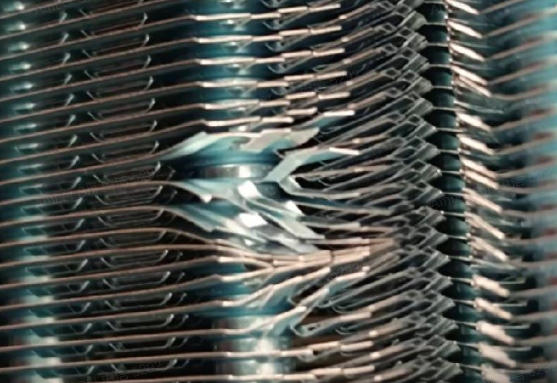
Q35: What to do if I experience numbness when accidentally touching the Mijia Air Conditioner Eco EGAT Label No.5 with 1 Star 12000BTU?
A: To ensure your safety, do not touch the indoor or outdoor unit while the Mijia Air Conditioner Eco EGAT Label No.5 with 1 Star 12000BTU is operating. If you experience numbness from accidentally touching the outdoor unit, please contact an engineer to check and connect the air conditioner’s grounding wire to prevent electric shock. If the grounding connection is normal, please contact after-sales service for inspection.
Installation
Q1: Where are the connecting pipes for the indoor unit located during the Mijia Air Conditioner Eco EGAT Label No.5 with 1 Star 12000BTU installation?
A: During the air conditioner installation process, the connecting pipes can be arranged according to installation requirements. They can exit from the left side, right side, or rear of the indoor unit, ensuring convenient installation in various locations throughout the room.
Q2: How much space is required for installing the Mijia Air Conditioner Eco EGAT Label No.5 with 1 Star 12000BTU?
A: The following are the minimum space requirements for installing the Mijia Air Conditioner Eco EGAT Label No.5 with 1 Star 12000BTU:
Indoor Unit:
1. There should be at least 15 cm of clearance between the top of the indoor unit and the ceiling.
2. There should be at least 250 cm of clearance between the bottom of the indoor unit and the floor.
3. If the connecting pipes and drain hose are installed from either the left or right side, the selected side must have no obstructions within 15 cm.
Outdoor Unit:
1. There should be no obstructions within 200 cm above the outdoor unit.
2. There should be no obstructions within 10 cm below the outdoor unit.
3. There should be no obstructions within 30 cm on the left side of the outdoor unit.
4. There should be no obstructions within 40 cm on the right side of the outdoor unit.
Q3: What is the maximum vertical distance between the indoor and outdoor units during installation of the Mijia Air Conditioner Eco EGAT Label No.5 with 1 Star 12000BTU?
A: The maximum vertical distance between the indoor and outdoor units during installation is 5 m.
Q4: How to install the Mijia Air Conditioner Eco EGAT Label No.5 with 1 Star 12000BTU?
A: The Mijia Air Conditioner Eco EGAT Label No.5 with 1 Star 12000BTU should be installed before use. Since installation requires professional expertise, it is recommended to schedule an on-site installation service. Self-installation is not advised.
Q5: What is the ideal location for installing the Mijia Air Conditioner Eco EGAT Label No.5 with 1 Star 12000BTU? What should be considered?
A: The installation of the Mijia Air Conditioner Eco EGAT Label No.5 with 1 Star 12000BTU requires professional expertise, so it is recommended to schedule an installation service instead of attempting to install it yourself.
Here are some key points for selecting the installation location of the outdoor unit:
1. Avoid exposure to direct sunlight or strong winds.
2. Keep away from heat sources, steam, and areas with potential flammable gas leakage or smoke;
3. Select a place that is not exposed to rain and has good ventilation.
4. Choose a place where the air outlet and operating noise of the air conditioner will not disturb other people, animals, or plants.
5. Make sure the air outlet is open and unobstructed to avoid affecting the performance of the air conditioner.
6. The outdoor unit should not occupy public sidewalks. If it is installed alongside roadside buildings, ensure the bottom of the mounting brackets is at least 25 cm from the ground and does not interfere with public passages.
7. To ensure effective room temperature regulation, it is recommended to remove obstructions like shutters or grilles in front of the outdoor unit. If removal is not possible, position the outdoor unit's air outlet as close as possible to the opening of the shutters or grilles.
8. The installation location should be firm and reliable. Unstable mounting may lead to increased noise, vibration, and potential safety hazards.
Here are some key points for selecting the installation location of the indoor unit:
1. Avoid direct sunlight.
2. There are no obstacles at the air inlet and outlet to maintain good air circulation.
3. Ensure easy and unobstructed drainage through the pipe.
4. The distance to radio devices (such as TV or radio) is greater than 1 meter.
5. The air conditioner shall be installed on a wall that can bear the weight of the indoor unit and does not increase the operating noise and vibration.
Q6: What is the size of the connecting pipes for the Mijia Air Conditioner Eco EGAT Label No.5 with 1 Star 12000BTU?
A: The copper connecting pipes for the Mijia Air Conditioner Eco EGAT Label No.5 with 1 Star 12000BTU have a diameter of Φ6 mm and Φ9 mm, with the outer diameter of Φ6 being 6.35 mm and Φ9 being 9.52 mm. The wall thickness is 0.6 mm or 0.7 mm for Φ6 pipes and 0.7 mm for Φ9 pipes.
Q7: What is the maximum allowable extended length for the connecting pipes of the Mijia Air Conditioner Eco EGAT Label No.5 with 1 Star 12000BTU?
A: The maximum allowable extended length for the connecting pipes of the Mijia Air Conditioner Eco EGAT Label No.5 with 1 Star 12000BTU is 10 meters. If the piping length exceeds 7 meters, it is necessary to add 15 g/m of refrigerant to ensure the cooling performance is not affected.
Q8: Does the Mijia Air Conditioner Eco EGAT Label No.5 with 1 Star 12000BTU have a connecting cable between the indoor and outdoor units?
A: The Mijia Air Conditioner Eco EGAT Label No.5 with 1 Star 12000BTU does not come with a connecting cable between the indoor and outdoor units.
Cleaning and Maintenance
Q1: Does the filter of the Mijia Air Conditioner Eco EGAT Label No.5 with 1 Star 12000BTU need to be replaced regularly?
A: As long as the filter is not damaged or deformed, there is no need to replace it.
Q2: How to clean the evaporator of the Mijia Air Conditioner Eco EGAT Label No.5 with 1 Star 12000BTU?
A: Turn off the power and remove the front panel of the indoor unit. First, spray a cleaning agent onto the evaporator fins and wait 5-10 minutes. Then, rinse thoroughly with clean water.
If using the Auto clean mode, refer to the corresponding instructions for operation. Cleaning the evaporator requires disassembling the indoor unit panel, so it is not recommended to do it yourself.
Note:
Avoid getting water into the electrical control box or display panel terminals, as this can cause electrical malfunctions.
Q3: How often does the auto clean function of the Mijia Air Conditioner Eco EGAT Label No.5 with 1 Star 12000BTU run?
A: It is recommended to use the auto clean function once a month. If the use environment is poor, such as dusty, it is recommended to shorten the cycle.
Q4: What to do if the Auto clean function of the Mijia Air Conditioner Eco EGAT Label No.5 with 1 Star 12000BTU fails or is ineffective?
A: If the Auto clean function fails or is ineffective, please follow these steps:
1. After activating the Auto clean function, the air conditioner should complete the entire cleaning process. The Auto clean process takes around 30-40 minutes. However, time can vary depending on the working environment. Ensure the air conditioner completes the Auto clean cycle automatically.
2. During the Auto clean process, protection can be triggered due to high or low temperatures, which could prevent Auto clean mode from operating properly or cause it to exit prematurely. It is recommended to start the Auto clean mode in a suitable temperature environment to avoid extreme temperatures.
3. During the Auto clean process, you can hear some noise, experience reduced airflow from the indoor unit, or notice cold or warm air being blown out. These are normal indications that the cleaning function is working. To avoid discomfort, it is recommended to ventilate the room.
Note:
1. The Auto clean function cannot be activated if the following temperature conditions are met: The indoor temperature is above 30 °C and the outdoor temperature is above 40 °C, the indoor temperature is above 38 °C, the outdoor temperature is above 40 °C, the indoor temperature is below 16 °C, or the outdoor temperature is below 0 °C.
2. If you turn off the device during Auto clean, the mode will not exit immediately. It will depend on the current operation process, and a proper running mode should be selected to complete or end the function, preventing damage to the air conditioner.
Q5: How to clean the filter of the Mijia Air Conditioner Eco EGAT Label No.5 with 1 Star 12000BTU?
A: It is recommended to clean the filter every three months. Once the Mijia Air Conditioner Eco EGAT Label No.5 with 1 Star 12000BTU is connected to the network, the system will automatically send a cleaning notification.
To clean the filter of the Mijia Air Conditioner Eco EGAT Label No.5 with 1 Star 12000BTU, please refer to the following steps:
1. Removing the filter: As shown in the figure, open the clips at both ends and the middle of the filter, and pull upward to remove the filter.
2. Cleaning the filter: After the filter is removed, use a vacuum cleaner to remove the dust or rinse the filter with clean water. If the filter is dirty, clean it with neutral detergent or soapy water, then rinse it with clean water and put it in a cool place to dry.
3. Reinstalling the filter: Align the clips with the snapping positions and reinstall the filter correctly.
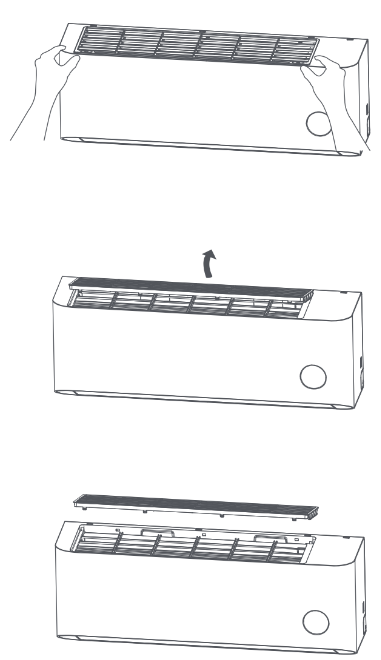
Note:
1. Do not use wire scrubbers or brushes to clean the air filter to avoid damage.
2. Do not wash the indoor unit with water to prevent malfunctions or electric shock hazards.
3. Do not wash the remote control with water to avoid malfunctions.
4. Do not use alcohol, gasoline, lacquer thinner, polishing powder, essential oils, toothpaste, detergent, or other chemical products or solvents to clean the air conditioner, as they will damage the product.
Q6: How to clean the Mijia Air Conditioner Eco EGAT Label No.5 with 1 Star 12000BTU, and how often should it be cleaned?
A: The internal components of the Mijia Air Conditioner Eco EGAT Label No.5 with 1 Star 12000BTU should be cleaned once a year by a professional. The exterior can be cleaned by yourself.
Warnings for cleaning the indoor unit:
1. Before performing care and maintenance on the air conditioner, make sure the air conditioner is turned off and the power supply is cut off.
2. When performing care and maintenance on the air conditioner, avoid accidents such as tumbling or falling to avoid injury.
3. After removing the indoor unit panel, do not touch the metal fins of the heat exchanger to avoid injury.
4. Do not clean this product with water. If water gets into the indoor unit, malfunctions or electric shocks will occur.
5. Do not use chemicals or solvents such as alcohol, gasoline, lacquer thinner, polishing powder, essential balm, toothpaste, or laundry detergent to clean any parts of this product to avoid damage.
6. After cleaning, make sure all parts are completely dry before installing and using them. Avoid direct sunlight.
The specific cleaning method is as follows:
Use a soft cloth or sponge dipped in clean water or diluted neutral detergent to wipe the surface of the air conditioner’s body.
Note:
1. Do not apply excessive force when cleaning the indoor unit panel to avoid damage.
2. Do not wipe the panel and remote control casing with wire cleaning balls, brushes, etc., to avoid damaging the casing.
Q7: How to use the Auto clean function of the Mijia Air Conditioner Eco EGAT Label No.5 with 1 Star 12000BTU?
A: You can use the Mijia Air Conditioner Eco EGAT Label No.5 with 1 Star 12000BTU’s Auto clean function by following the steps below:
1. When the air conditioner is turned off, simultaneously press and hold the Eco button and the Timer button for more than three seconds to enable the Auto clean function.
2. The remote control will show Auto Clean, and the display of the air conditioner is blinking.
3. Then the air conditioner will run for about 40 minutes, and automatically exit the Auto clean function and shut down.
Note:
1. The duration displayed on the remote control and the air conditioner display can vary.
2. There can be noise, breeze, and cold air during the Auto clean operation, which is normal.
3. When the ambient temperature is too high or too low, the air conditioner will automatically activate the protection function, which can cause the Auto clean function to be exited or fail to start.
4. Auto clean can only clean the heat exchanger.
Does it help?
Yes
No